
As an Amazon Associate we earn from qualifying purchases.
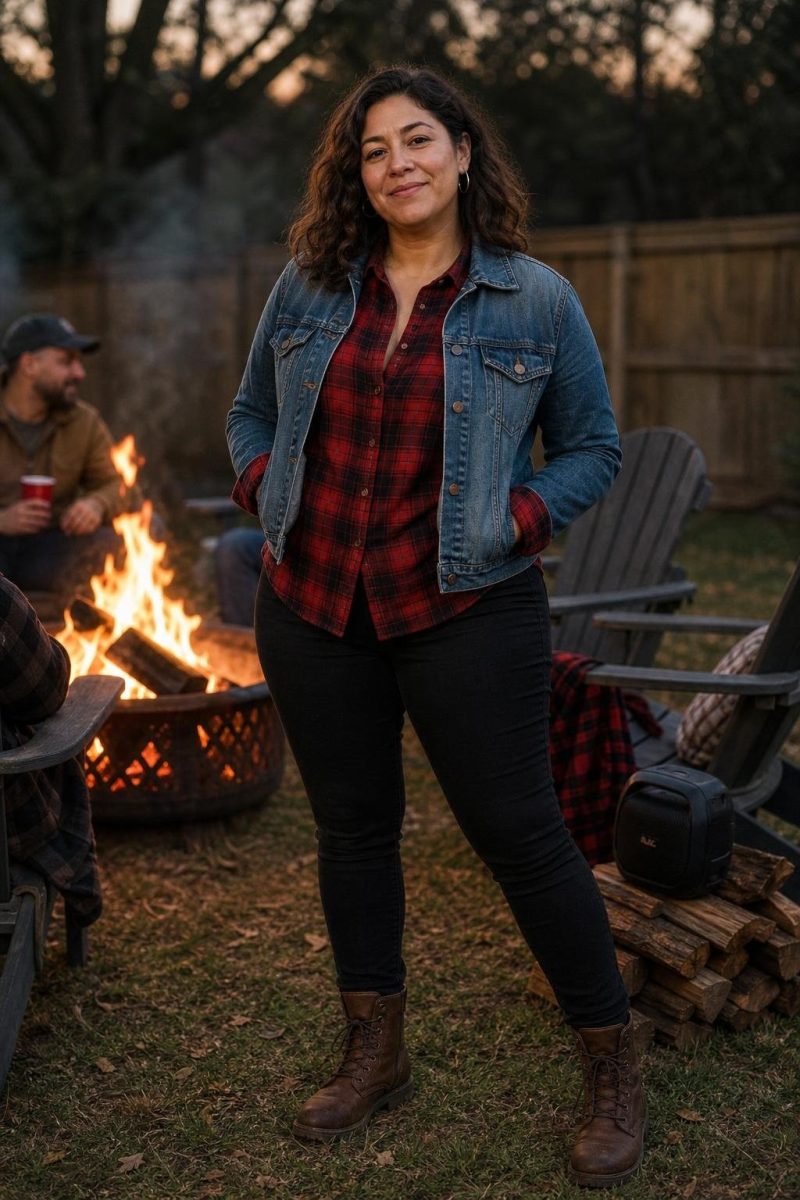
The invitation said “Saturday, 6pm, our place, come hungry.” That was the entire dress code. I stood in my closet holding a dress in one hand and jeans in the other, scrolling back through the group text for clues, trying to remember whether these people have a patio or a dining room.
Most events in an actual life come with no written rules. Weddings tell you what to wear. Tailgates, cookouts, club dinners, rodeos, and the birthday party for someone’s husband you have met twice do not. But they still have rules, and everyone in the room can tell when you missed them. Those unwritten rules are readable, and readable from information you already have before you open the closet.
The three questions that decode any invitation
Every occasion without a dress code comes down to three pieces of information: where it is, what time it starts, and who else is going. Ask them in that order, and by the third answer the closet has narrowed to two or three options.
Where is it. The strongest signal by far, because the place limits what is even possible. Find out the actual venue, not the category. “Dinner at their house” and “dinner at the club” are different events with the same word in front of them.
What time it starts. Time is the formality dial. Before noon leans casual almost regardless of venue. Afternoon rewards being polished rather than dressed. Cross into evening and the scale slides up: darker colors, more structure, real shoes, jewelry that catches light. Time also tells you temperature: a 4pm start in October means being outside as the sun drops, which is a layering problem.
Who else is going. People skip this one and it is the one that saves you. The guest list tells you the age range, whether children are coming, and whether these are your friends or your husband’s coworkers. Kids present means the event drops a notch and you will be on the floor at some point. Colleagues or in laws mean the room is being observed.
When the answers conflict, use this order: venue overrules time, and time overrules the guest list. A 7pm event in a barn is still a barn, so you wear the boots. A noon party at a club still follows the club’s standard. The guest list rarely changes what you wear, only how carefully you wear it: same outfit, better fit, hair actually done.
If you get one question, do not ask “what should I wear.” That makes people say “oh, whatever, it’s casual,” which is useless. Ask “what are you wearing,” and you get a garment. A garment is a data point.
The venue rule
Here is the principle that carries the rest of this article: the setting sets both the floor and the ceiling of formality, and you dress inside that band. The floor is how casual you can go before you look like you did not care. The ceiling is how dressed you can go before you look like you misread it.
Outdoors versus indoors. Outdoors lowers the ceiling and raises the practical demands. Wind, sun, bugs, and temperature swings all vote against delicate fabrics and elaborate hair. Indoors nothing is working against you, and a light fabric with a layer beats a heavy one with no options.
Private home versus commercial venue. A private home is somebody’s actual life and the hosts set the standard, so do not out dress them in their own kitchen. A restaurant, club, or event space has a house standard independent of anyone’s preference, usually a notch above the same gathering at home.
Seated versus standing. Seated events are kind to you: a skirt that rides, a shoe that pinches, and a stiff waistband are all survivable for two hours in a chair. Standing events, where people mingle and eat off small plates, need shoes you can stand in for hours and a bag that leaves both hands free. A clutch is a problem all night.
What is under your feet. Ask what the ground is. Grass plus a thin heel means you sink and spend the evening on your toes. Gravel eats delicate soles and turns ankles. Cobblestone catches narrow heels. For grass or gravel I go to a block heel, a wedge, a boot, or a dressy flat. On a polished floor, where you will actually dance, the heel category reopens.
Game day and tailgating
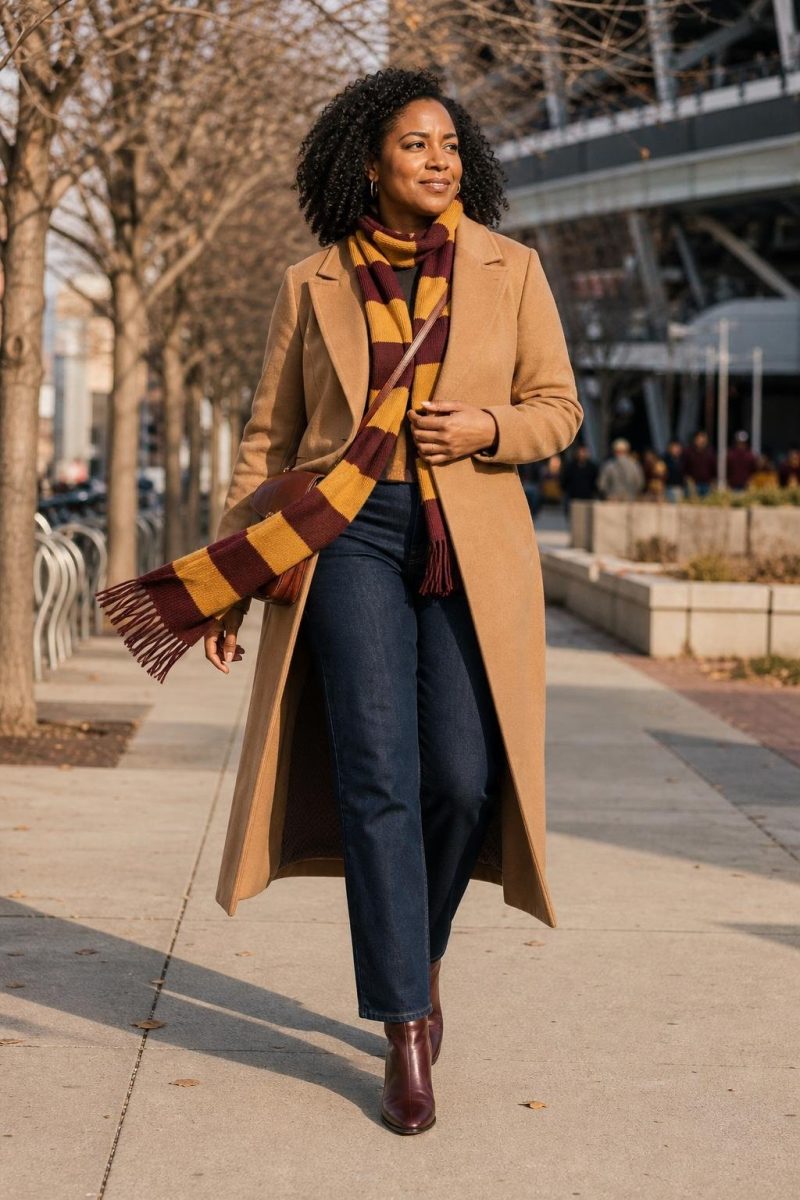
Game day is a costume event with a comfort problem underneath. It demands that you read as part of the group: team colors, visible affiliation, enough energy that you look like you came to participate. It also demands, and this is what people underestimate, that you can walk a long way from parking, stand for hours, and survive a temperature drop by the fourth quarter.
The formula is team color on top, denim or another comfortable bottom, sneakers or boots, and a layer that ties around your waist. If you want more polish than a jersey allows, a sweater or knit top in a team shade does the same job with more range. There are plenty of ways to build game day outfits that do not involve a giant shirt you swim in.
The trap is dressing for the tailgate and forgetting the stadium. The lot is sunny and stationary. The stadium is windy, cold once the sun sets, and involves stairs. Second trap: white shoes on a grass lot do not come back.
The country club and similar private venues
This is the one category here where written rules may genuinely exist. Policies vary a great deal by club, and many post a code covering the dining rooms, the pool, and the course separately, with rules about denim, athletic wear, collars, and hats indoors. As a guest, ask your host to send you the club’s policy. It is a document and they have it.
Absent that, the situation demands quiet polish. Tailored bottoms or a knee length skirt, a knit or blouse with real structure, a jacket available, and shoes that are neither athletic nor obviously going out shoes. Color runs soft rather than loud. This is where the understated old money look earns its keep, because it is built on this restraint, and the classic country club outfit formula is simple once you see it: good fabric, clean lines, nothing shouting.
The trap is assuming casual means what it means everywhere else. Many clubs treat denim, leggings, and athletic tops as separate questions with different answers depending on which room you are in.
Summer holidays and cookouts
Fourth of July, Memorial Day, Labor Day, and the general category of somebody’s backyard in August. These demand heat tolerance first and everything else second. You will be outside, partly in sun, near a grill, possibly holding a child, from afternoon into dark.
Breathable fabric is the whole game: cotton, linen, and light knits in a shape that does not cling. A sundress with flat sandals, shorts with a relaxed top, or a skirt with a tee. Most easy summer outfits already fit the brief and the holiday version adds color intent. For the Fourth, one nod is enough, and a red top or navy dress reads better than head to toe theme. There are more grown up ways to do Fourth of July outfits than a flag print.
The trap is the sunset. Backyard parties get cold once the sun goes down and everyone is still outside, so a denim jacket or light cardigan in the car changes your evening. Second trap: pale linen and a folding lawn chair leave marks.
Western and rodeo events
Western events have a real dress language, worth respecting rather than approximating. What they demand is functional clothing that happens to look good: boots because the ground is dirt and there are animals, denim because it holds up, a hat because the sun is relentless, and a top with enough shape that the outfit does not swallow you.
Straight or bootcut jeans over boots, a blouse or western shirt, a belt that means something, and outerwear for the season. Suede, fringe, and turquoise are the accent vocabulary. One or two is plenty. The western chic approach works because it borrows the shapes without becoming a costume. If it is a rodeo rather than a country concert, lean practical: closed shoes, a jacket, hair that survives wind.
The trap is new boots at an all day event. Western boots need breaking in and a rodeo is not the place to start. Second trap, the hat: buy one that afternoon and you will be carrying it by 9pm.
Date night
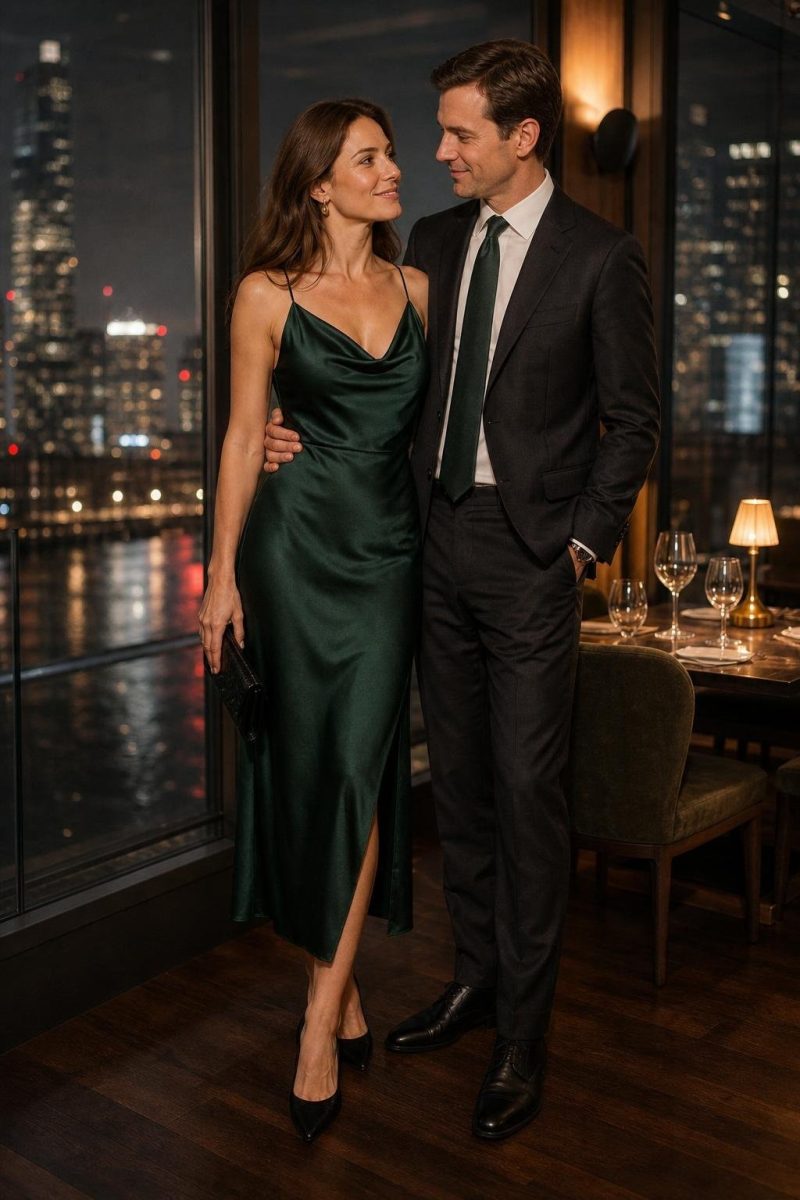
Date night has no dress code because it has no audience, which is exactly why it goes wrong. What matters is that the two of you land in the same register. A dress and heels next to a hoodie is a mismatch you both feel across the table.
Pick the register together before either of you gets dressed, and pick it from the plan. A walk and a casual dinner is jeans and a good top for both of you. Reservations and a bar afterward means a dress or tailored bottoms, a real shoe, and him in a button down. This is what coordinated date night outfits are for, and why coordinating without matching is worth learning: shared color story, same formality, different pieces. If he needs a starting point, hand him a template rather than an opinion, because men’s date night outfits come down to about four reliable combinations.
The trap is dressing for the restaurant and forgetting the walk and the parking garage. If you cannot walk three blocks in the shoes, it is not a date night shoe.
The party where you do not know the host
You are going because your husband works with him, or your friend is bringing you, or your neighbor invited the whole street. You have no read on the house, the crowd, or the standard. This is the hardest case.
Work through whoever connected you to the event. Ask what the last one was like, whether people sat or stood, whether it was inside or in the yard, and what they are wearing. Two specifics get you close. Then dress to the middle of the range and make the outfit good rather than notable: dark jeans or tailored bottoms, a structured top, a jacket you can remove, a shoe you can stand in. Neutral, well fitted, and quiet is the safest thing to be among strangers, because it survives the party turning out either way.
The trap is the statement piece. A party where you know nobody is the wrong night to debut something loud, because you will spend the evening being introduced as the woman in the outfit.
The quick read, by occasion
| Occasion | Read the Room By | Safe Choice | The Trap |
|---|---|---|---|
| Game day and tailgating | Home or away, lot or stadium, kickoff time and forecast | Team color knit or tee, denim, sneakers or boots, a jacket you can tie on | Dressing for the sunny parking lot and freezing in the fourth quarter |
| Country club and private venues | The club’s own written policy, which room you are in, whether golf or pool is involved | Tailored bottoms or a knee length skirt, structured knit or blouse, jacket available, refined flats or a low heel | Assuming denim, leggings, or athletic wear read the way they do everywhere else |
| Summer holidays and cookouts | Yard or park, afternoon into evening, whether children are running around | Cotton or linen dress, or a relaxed top with shorts or a skirt, flat sandals, a layer in the car | The temperature drop at sunset, and grass stains on pale fabric |
| Western and rodeo | Arena, fairground, or venue floor, plus how much of it is outdoors | Straight or bootcut denim, boots, a blouse or western shirt, one western accent | New boots, or a hat you bought that morning and carry all night |
| Date night | The plan itself, and what he is wearing, agreed before anyone gets dressed | Both of you at the same formality: dark denim and a good top, or a dress with a real shoe | Shoes chosen for the table and not for the walk and the parking |
| Party where you do not know the host | Whoever invited you, pressed for two specifics about the last one | Dark bottoms, structured top, removable jacket, standing friendly shoes, quiet colors | Debuting a statement piece in a room where nobody knows you yet |
Dressing one notch above, and when not to
The default advice is sound: when you cannot tell, aim one step more dressed than your best guess. Being slightly more put together reads as respect for the host, and it is recoverable. Remove a jacket, take off jewelry, push sleeves up. Being underdressed has no such lever. There is nothing to add in a parking lot.
One notch means exactly that: sneakers to a loafer, jeans to tailored bottoms, a tee to a structured knit. It does not mean jumping categories. When a written code exists, such as the expectations behind black tie wedding guest attire, you follow the code instead of guessing. Written codes are a gift. Occasions with none are where judgment does the work.
Three situations where dressing up backfires. First, outdoor and physical events. At a tailgate, a rodeo, or a beach cookout, being more dressed is not more respectful, it signals that you did not understand the day.
Second, someone else’s family tradition: the annual cookout, the Sunday dinner, the holiday at his parents’ house. These have a settled standard everyone knows, and arriving dressed up makes the regulars feel judged in their own tradition. Match the family, then let fit and grooming carry you.
Third, anything where you will be the only one. If you have real evidence that nobody else will be dressed, dressing up is not polish, it is conspicuousness. This is where I would also keep whatever trend you are wearing in check. Trends are for rooms that are looking at clothes. Most rooms are not.
What to do when you have read it wrong
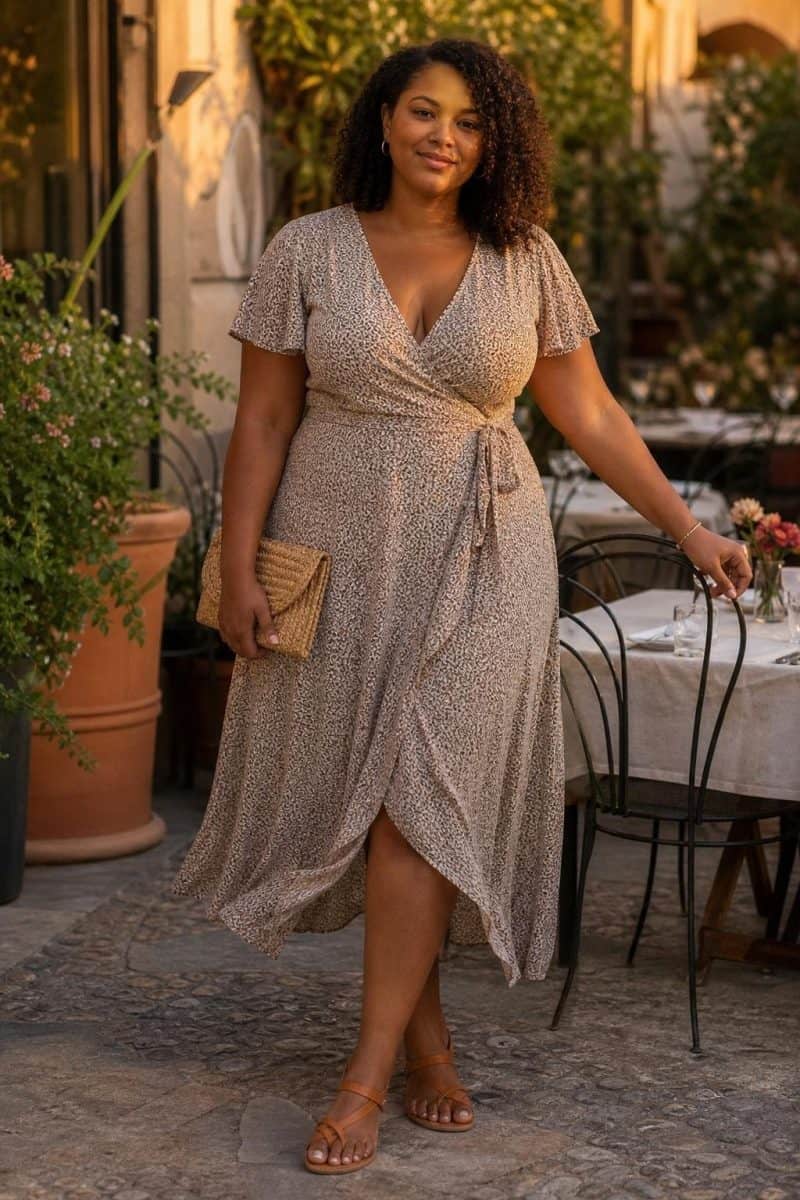
It happens to everyone. The difference between a bad night and a small adjustment is whether you built escape hatches into the outfit before leaving.
The layer you remove. Build every uncertain outfit around one piece you can take off in the entryway: a blazer over a simple top, a cardigan over a dress, a scarf, a necklace. Removing it drops the outfit a full notch in four seconds, and it works in reverse if you leave it in the car.
The shoes in the car. The single most useful habit here. Keep a second pair in the trunk whenever you are unsure: flats if you are in heels, a sneaker if you are in flats, a boot if the ground is a question mark. Shoes change the register of an outfit more than any other swap.
Jewelry and hair. If the room is far more casual than you expected, take off the earrings, pull your hair up, and put your bag down. Half of formality is signals, and removing three tones an outfit down.
Then let it go. If nothing in the car helps, the recovery is behavioral. Find the host, tell them the house looks wonderful, and stop mentioning it. Apologizing twice makes everyone notice something they had not noticed once. Nobody remembers the woman who was slightly too casual. Everyone remembers the one who talked about it all night.
Frequently asked questions
What do you wear when there is no dress code?
Decide from the venue, the start time, and the guest list, in that order, then dress to the middle of what they suggest and add one removable layer. Dark or neutral bottoms with a structured top and a jacket work for almost every unlabeled event. Ask the host what they are wearing rather than what you should wear.
What should you wear to a country club?
Ask your host for the club’s written policy first, since rules vary by club and often differ between the dining room, the pool, and the course. Without it, tailored bottoms or a knee length skirt with a structured knit or blouse, plus a jacket, is the reliable read. Skip athletic wear and keep colors quiet.
Is it better to be overdressed or underdressed?
Slightly overdressed is safer in most indoor settings, because you can remove a layer, jewelry, or a jacket to come down a notch. The exceptions are outdoor and physical events, family traditions with a settled standard, and anything where you would clearly be the only person dressed up.
What do you wear to a tailgate?
Team colors on top, denim or another comfortable bottom, sneakers or boots you can stand in for hours, and a layer for the temperature drop. Dress for the whole day rather than the sunny hour in the lot, since stadiums get cold and windy after sunset. Leave white shoes home if the lot is grass.
None of this requires a rule book. It requires three questions before you open the closet, respect for what the ground will do to your shoes, and one layer and one spare pair within reach. Do that and the invitation that says nothing stops being a problem you solve on the drive over.

About the Author
Allena Rissa
Founder & Editor
Allena Rissa is the founder and editor of The Better Fit. She has been writing about clothes since she was twenty-two, and for nine years she has been the one dressing her husband, her kids, and herself for family photos, fall weddings, work conferences, and Christmas cards that had to land. On the site she covers five pillars: Her Style, His Style, Together, Occasions, and Foundation, the bras and fit mechanics that started it all. Her advice has been featured in Cosmopolitan, Better Homes & Gardens, Insider, and NBC.