As an Amazon Associate we earn from qualifying purchases.
I came home from nine days in Portugal and unpacked three tops, a dress, and a pair of heels that never left the suitcase. Meanwhile I had rinsed the same wide leg pants in a hotel sink twice, because they were the only bottoms I brought that went with everything else.
Here is the short answer on what to wear on vacation: build your vacation outfits from a small set of pieces that all work with each other, in fabrics that survive a suitcase, with shoes you can genuinely walk in. Two or three bottoms, a handful of tops, a couple of layers, one thing that reads dressy for evenings. Let the destination adjust the details instead of rebuilding the system. That is how you get vacation outfits for any destination without dragging your closet through an airport.
The one principle: pack a capsule, not outfits
Most people pack by imagining days. Monday is the flight, Tuesday is the beach, Wednesday is that dinner. Each day gets its own top, bottom, and shoes, and the bag fills with seven costumes that share nothing.
That fails for three reasons. The weather does not read your itinerary, so one cold front kills Tuesday’s outfit. Plans change, and the dinner that moves leaves you with a dress and nowhere to go. Worst of all, there is no recovery: spill something on Thursday’s shirt and the day is gone, because nothing else in the bag goes with those pants.
A travel capsule works differently. You pack pieces chosen so that any top goes with any bottom and any layer goes over all of it, then assemble them each morning based on what the day turns out to be. Ten garments produce dozens of combinations, and one stain costs you a fraction of your options instead of a whole day.
The test I apply to everything before it goes in the bag: does this work with at least two other things I am bringing? If not, it does not travel.
Building a travel capsule for a week
Give me a week away and I will give you numbers, because vague advice about packing light helps nobody standing over an open bag. For seven days I pack five tops, three bottoms, two layers, and three pairs of shoes, plus one dress or jumpsuit if the trip has an evening component. Swimwear and sleepwear live outside the count.
- Five tops: two plain knits in your base neutrals, two with some interest, one that works for dinner.
- Three bottoms: one you would walk all day in, one that dresses up, one comfortable enough for a plane that still looks fine at lunch.
- Two layers: one lightweight shirt jacket or cardigan, one that handles wind and air conditioning.
- Three pairs of shoes: a walking shoe, a sandal or flat, one evening option. Wear the bulkiest pair on the plane.
The ratio does the real work. Tops outnumber bottoms two to one because tops get photographed and show the wear of a hot day, while bottoms repeat and nobody notices. Flip that ratio and you have packed more volume for fewer outfits, the worst trade in travel.
Color is the other constraint. Pick two neutrals that agree and one or two accents, then refuse anything outside that story. Same discipline as a warm weather capsule wardrobe at home, compressed into a suitcase. If you already run a pared down wardrobe system, packing is mostly lifting a section of it out and zipping it shut. And pack for the trip you are taking, not the trip you might take: a beach week does not need a blazer on the chance of a nice restaurant.
What carries the wardrobe, by trip type
The structure holds across trips. What changes is which pieces anchor it and which you can leave home.
| Trip Type | What Carries the Wardrobe | What to Skip |
|---|---|---|
| Beach resort | Swimwear that works under a cover up, two easy dresses, wide leg pants, a linen shirt as a layer, sandals you can wear wet | Structured jackets, anything that needs ironing, extra closed shoes, heavy denim |
| Cruise | Daytime knits with shorts or skirts, one or two dressier evening looks, a wrap for cold dining rooms, deck friendly flats | Multiple formal options, a separate outfit per night, anything needing thirty minutes to assemble |
| City break | Dark bottoms that hide a day of walking, layerable tops, a cross body bag, a walking shoe you have already broken in | New shoes, delicate fabrics, a bag you have to hold, more than one dressy look |
| National park or outdoors | Performance or merino base layers, two pairs of hiking pants, a shell that packs small, wool socks, a hat | Cotton next to skin, white anything, sandals as your only backup, jewelry |
| Warm weather wedding trip | The wedding look plus one backup dress, block heels or dressy flats for grass and sand, a light wrap, day clothes in the same color story | Stilettos, a third formal option, a clutch for every event, heavy shapewear in humidity |
| Cold weather trip | Thermal base layers, two sweaters, one coat that closes over everything, waterproof boots, gloves and a hat that pack flat | A second coat, extra heavy knits, cotton socks, anything that only works indoors |
At a beach resort, day clothes and swim clothes are one system. A cover up that also works as a dress over shorts earns double its space, and easy pieces in the spirit of relaxed summer outfits carry more of the week than anything structured. Our roundup of cute summer outfit ideas maps onto a resort week, and a city break runs on the same logic with darker bottoms and better shoes.
A warm weather wedding trip breaks most capsules, because people treat the wedding as a trip inside the trip. Choose the event look first, then build the week in colors that agree with it, so the wrap and sandals and jewelry pull double duty. Our guide to beach wedding guest dresses covers the fabric and length questions that matter when the ceremony is on sand.
Shoulder season travel means a hot afternoon and a cold evening in one day, and the answer is not more clothes, it is better layers. The logic behind late summer outfits transfers directly: bare arms at noon, covered by dinner, same base outfit underneath.
Traveling with a partner and expecting photos? Spend two minutes on it first. Nothing needs to match exactly, but agreeing on a color family stops one of you turning up in navy and the other in bright orange. Our take on coordinating outfits as a couple explains how to do it without looking costumed, and beach photo outfits for couples applies to any sunny setting.
What resort wear actually means
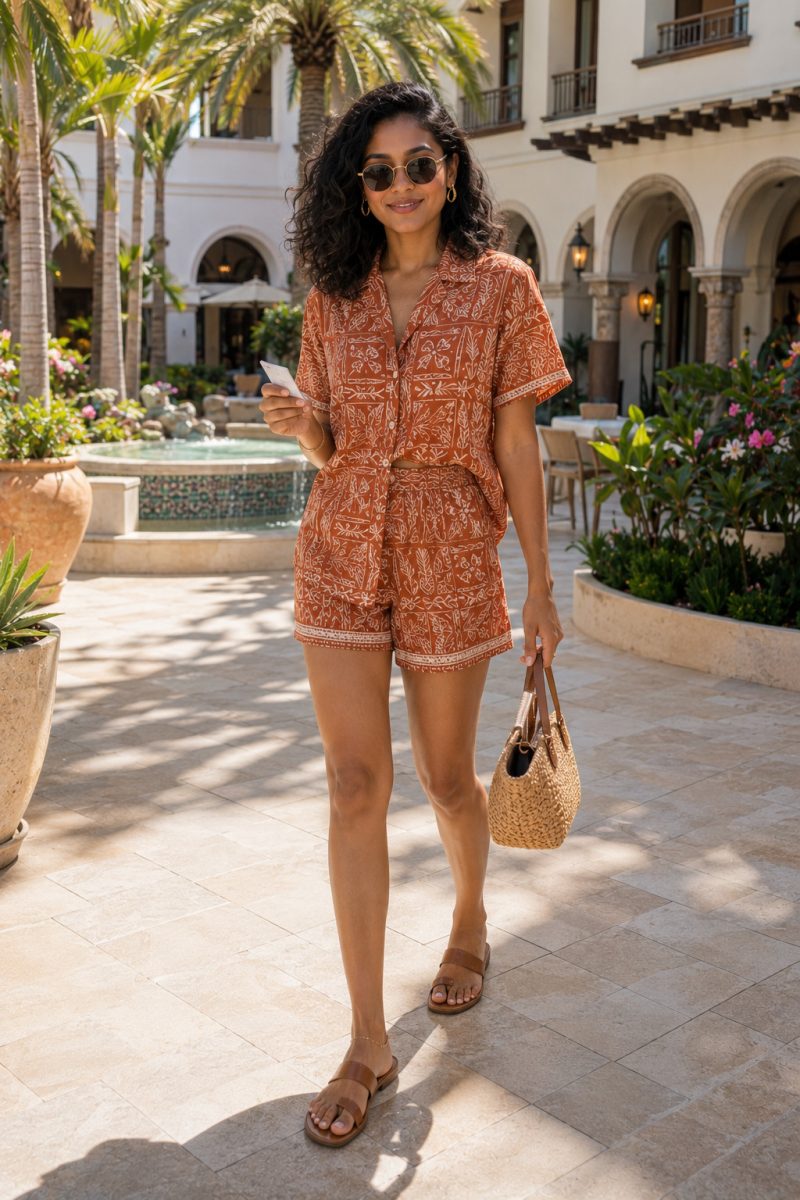
Resort wear shows up on wedding invitations and ship daily programs and sends people straight to a search bar. The honest definition: warm weather clothing that is relaxed in shape but polished in finish. It assumes heat, sun, a pool deck nearby, and a setting where you are not in workout clothes. Flowy silhouettes, natural fibers, brighter colors than an office takes, and nothing that reads as a suit.
Daytime resort dressing is the easy half: linen or cotton, loose shapes, a cover up over swimwear, a sundress, a camp collar shirt with shorts, flat sandals. The line to respect is that a swimsuit alone is beachwear. The moment you leave the sand for a restaurant or lobby, something goes over it. The coastal grandmother look is daytime resort wear given a name: neutral linen, open knits, easy pants, quiet shoes.
Evening resort is where people get stuck. Keep the relaxed shapes and upgrade the fabric: a maxi dress instead of a sundress, a silky top with wide leg pants, a jumpsuit, sandals with a small heel. Add earrings, and skip the gown unless the invitation calls for one. For shapes that work across both halves of the day, our guide to everyday outfits for women over 40 translates almost directly, since it runs on the same relaxed and finished balance.
Cruise dressing specifically
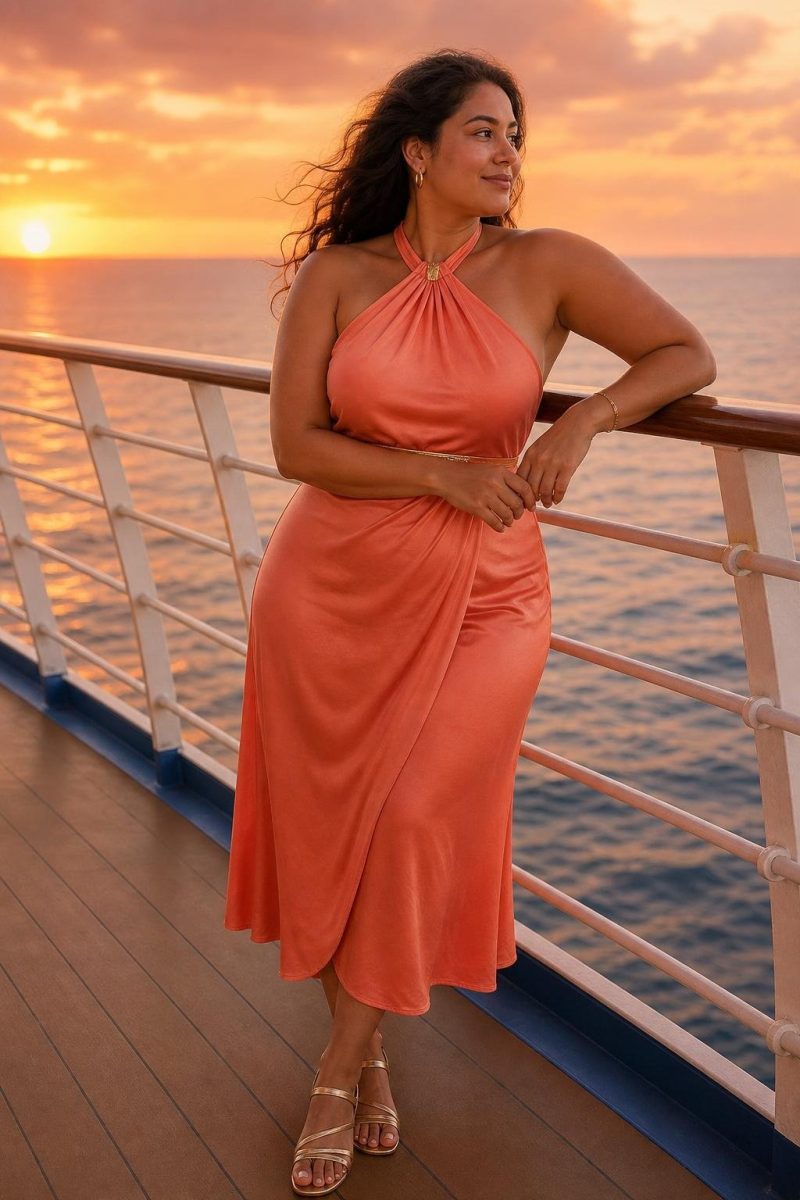
Cruise packing has a split personality. Days are casual: a pool deck, a port town, a tender boat. Evenings are dressier, and how much depends on the night and the venue.
Dress codes vary by cruise line and they change, so treat anything you read as a general guide and check your line’s current wording. Broadly, the codes sort into three levels. Casual or resort casual generally means what you would wear to a nice lunch: sundresses, skirts, collared shirts, no swimwear in dining rooms. Smart casual generally means a step up: a dress, or pants with a nicer top and dressy shoes. Formal night, sometimes called gala or chic night, generally means a cocktail dress, a gown if you want one, or dressy separates. Formal nights are usually only a couple of evenings on a week long sailing, and most ships keep casual dining available every night.
The packing constraint on a ship is real. Cabin storage and hanging space are limited, and most sailings have no laundry room down the hall. That argues for pieces that repeat: one evening bottom with three tops beats three complete outfits. Bring a wrap, since dining rooms run cold. Our cruise outfit ideas cover the day to evening handoff in more detail.
Stated plainly: do not pack a separate formal look for every dressy night. Two evening bottoms and three tops that interchange cover a week of dinners, and nobody at your table is keeping inventory.
The airport outfit
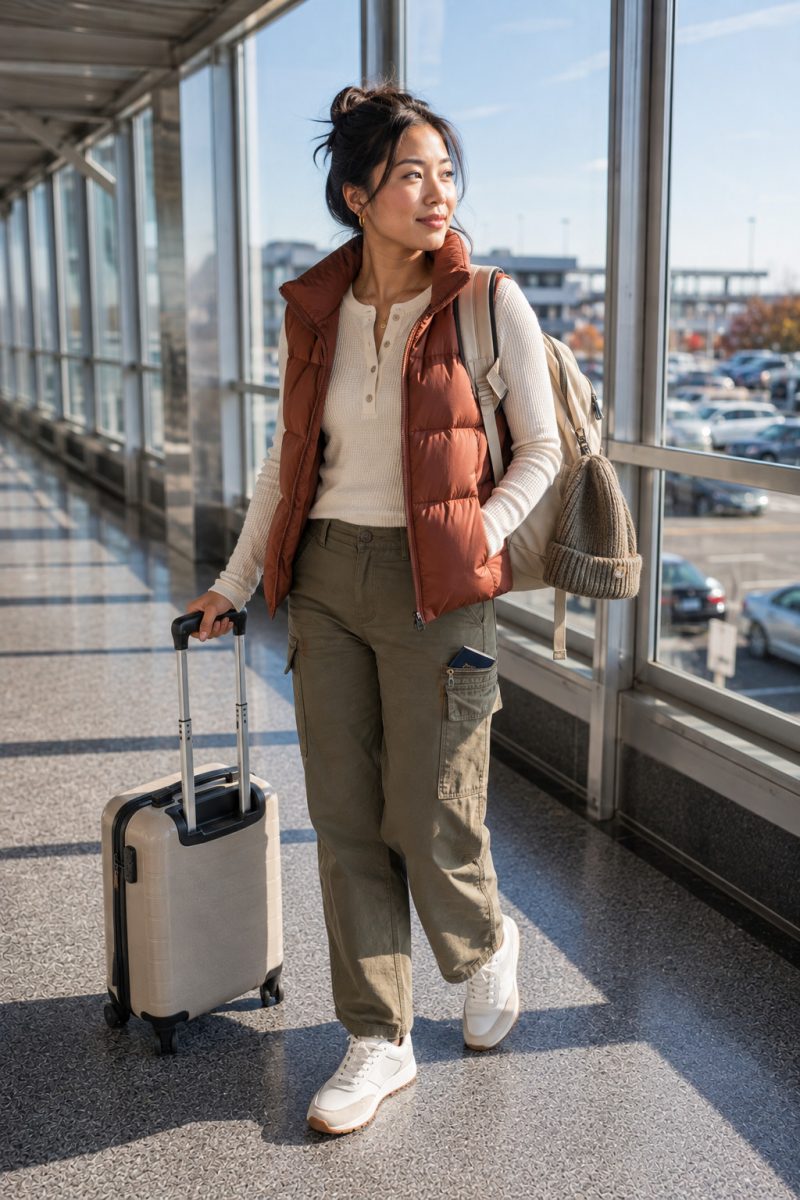
A travel day outfit has one job: carry you through a big temperature swing, a security line, and hours in a seat, and still look presentable when you land.
Layers first. A knit top with a shirt jacket over it, plus a wrap that doubles as a blanket, covers a hot terminal and a freezing cabin without you changing anything. Shoes second: slip on or easy lace styles worn with socks, since floors are cold and you may be asked to take them off.
Fabric is the part people skip. Six hours in a seat creases anything that creases, so choose things that recover: ponte, a good jersey, a performance blend, merino. Avoid pure linen unless you have made peace with landing rumpled, and pick a bottom with a soft waist, because a rigid waistband in a seat is a slow misery. Our guide to airport outfits for fall travel works the same way in any month.
Fabrics that travel well and fabrics that do not
Fabric decides whether your capsule holds up or falls apart by day four. Here is how the common ones behave in a suitcase.
- Merino wool. The best travel fiber there is. It resists odor for days, releases wrinkles when hung in a steamy bathroom, and dries overnight after a sink wash. Light merino works in heat as well as cold.
- Jersey knits. Knits do not wrinkle the way wovens do and they recover from hours in a seat. Heavy cotton jersey holds water and dries slowly, so favor blends if you will wash anything on the road.
- Performance blends. The workhorses for outdoor trips: they shed wrinkles almost entirely, dry in a few hours, and handle rain. They hold odor faster than wool, so plan on washing more often.
- Linen. Unmatched in heat because it breathes and dries fast, but it wrinkles the instant you sit and does not recover. Bring it for resort days where creases are part of the look, and keep it off the plane.
- Silk. Packs to nothing and lifts an evening outfit instantly, but it water spots, shows sweat, and needs careful handling rather than a sink wash. One or two pieces.
- Cotton poplin. Crisp and comfortable, but it wrinkles hard, holds those wrinkles, and takes a full day to dry. Worth it only if you will steam it.
In heat, weight and weave matter more than the fiber name: an open weave in a light color beats a dense one every time, the same principle behind our approach to dressing for genuinely hot weather at home.
What always gets over-packed
The same four categories show up in every suitcase that came home too heavy.
Shoes. The worst offender, because shoes are heavy, oddly shaped, and easy to justify. Three pairs is the ceiling for a week, and the third earns it by covering evenings. If a fourth pair exists for one possible activity, leave it.
“Just in case” outfits. Pieces packed against a scenario that has not happened: the surprise dinner, the sudden cold snap, the invitation that never arrives. They rarely get worn, and they are why suitcases come home half unused. Replace the category with one adaptable layer and one dressier top.
Single-occasion pieces. Anything that works for one event and coordinates with nothing else you brought, including the novelty item bought for the trip. If it fails the works with two other things test, it stays home.
Jewelry. It weighs nothing, which is why people bring far too much, then spend the week worried about a hotel safe. One set you wear daily plus one pair of earrings that dresses an outfit up covers every evening.
Frequently asked questions
What should I pack for a week vacation?
Pack five tops, three bottoms, two layers, and three pairs of shoes in one color story, so every top works with every bottom. Add a dress or jumpsuit if there is an evening component, plus swimwear and sleepwear. That set covers seven days without any repeat anyone notices.
What is resort wear for women?
Resort wear is warm weather clothing that is relaxed in shape but polished in finish: linen and cotton, sundresses, wide leg pants, cover ups, flat sandals. Evening keeps the same shapes in nicer fabrics with a small heel and real jewelry. It sits between beachwear and office clothing.
What should you not wear on a plane?
Skip rigid waistbands, fabrics that wrinkle permanently such as linen or crisp poplin, and shoes that are hard to remove or cannot be worn with socks. Avoid one heavy layer with nothing under it, since cabins and terminals run at different temperatures.
What do you wear on a cruise during the day?
Daytime on a ship is casual: sundresses, shorts or skirts, easy knit tops, swimwear with a cover up on the pool deck, and flat shoes with grip for wet decks and port walking. Bring a light layer, since indoor spaces run cold, and keep that cover up handy, because lines generally ask that swimwear be covered in dining rooms.
The trip you remember is never the one where you had the most options. Pack a small group of pieces that agree with each other, choose fabrics that forgive a suitcase, and bring shoes that let you say yes to a long walk. Then spend the week thinking about where you are, not what you are wearing.

About the Author
Rachel Meyers
Contributing Fashion Creator · Amazon Influencer
Rachel Meyers is a contributing fashion creator for The Better Fit, filming try-ons from Orem, Utah. She has spent three years in the Amazon Influencer Program and is an All-Star contributor in the Viral Vue creator community, and her storefront, Rachel's Reviews and Fun Finds, leans into women's fashion and shoes. Rachel is also a certified life and health coach, and that double life shapes how she reviews: she cares less about how a piece photographs and more about how it feels on a school run, at work, or on the third wear. Her latest try-ons land on YouTube at @rachelsfunfinds.