As an Amazon Associate we earn from qualifying purchases.
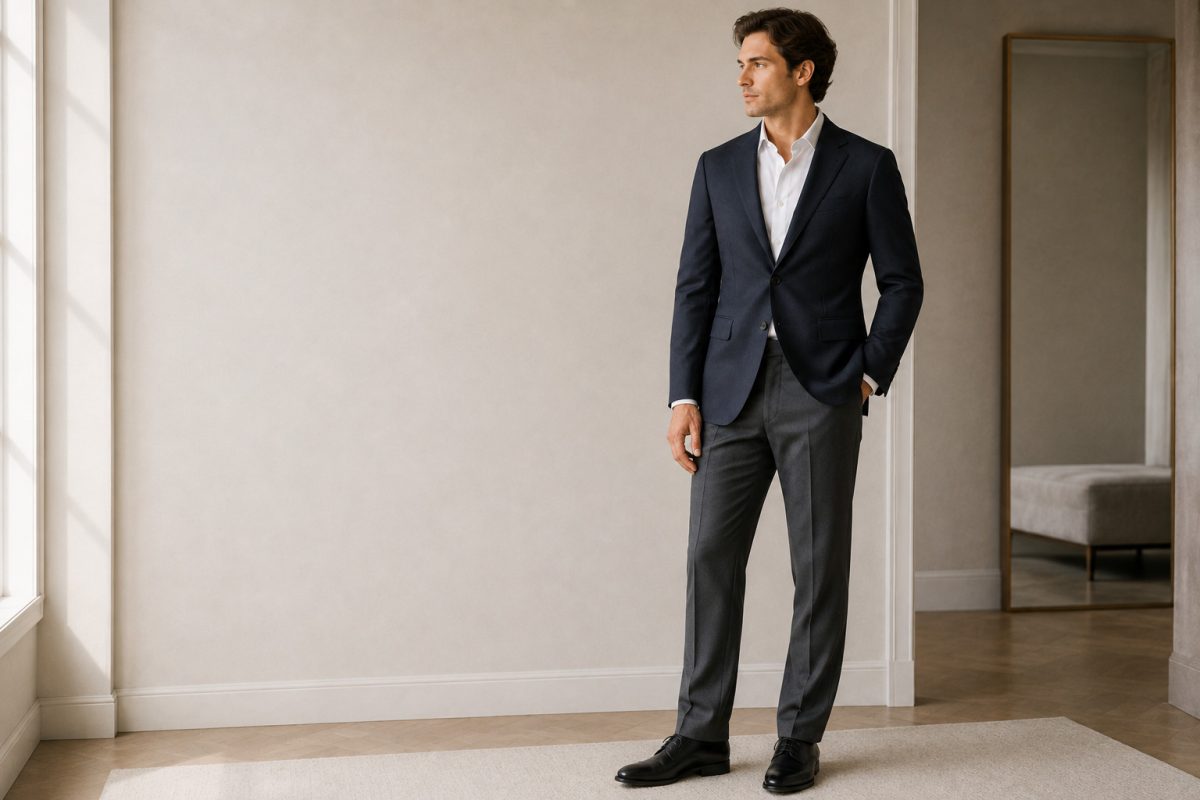
Three weeks before my cousin’s wedding, my husband came downstairs in the suit he wears to everything and asked if it looked fine. It did not. The jacket shoulders sat past the actual edge of his shoulders, so the sleeves hung with a soft dent in them, and the trousers puddled over his shoes. The suit had simply never fit him, and nobody had said so out loud in six years.
I am the person in our house who decides what he wears to the wedding, the office party, and the school photos. If that is you, this is the mens style guide I wish someone had handed me years ago: how clothes should sit on a body, which fabrics behave, and how to check it while he is still in front of you. Once you can see fit, picking outfits he will actually put on gets much easier.
Fit is the whole thing
Here is the argument, plainly: fit does more work than fabric, color, or anything else you could change about a man’s clothes. A plain shirt that fits reads as intentional. A beautiful shirt that does not fit reads as borrowed.
The clearest place to see why is the shoulder seam. His shoulder runs out from the neck, reaches a bony corner, then turns down into the arm. The seam on a shirt or jacket is engineered to land on that corner, where the flat panel of the body ends and the tube of the sleeve begins. When the seam sits there, fabric hangs straight off the corner with nothing pulling on it.
Move the seam inward toward his neck and the sleeve has to stretch over shoulder it was never cut to cover. You get diagonal drag lines from the armhole and binding when he reaches. Move it outward past the corner and nothing holds the fabric up, so it collapses into a fold sitting on top of his arm. That droop is what makes a man look rumpled in something that technically closes. It is also why the answer to how should mens clothes fit always starts at the top and works down.
How each garment should fit
Every category has two or three points that decide the outcome.
Shirts
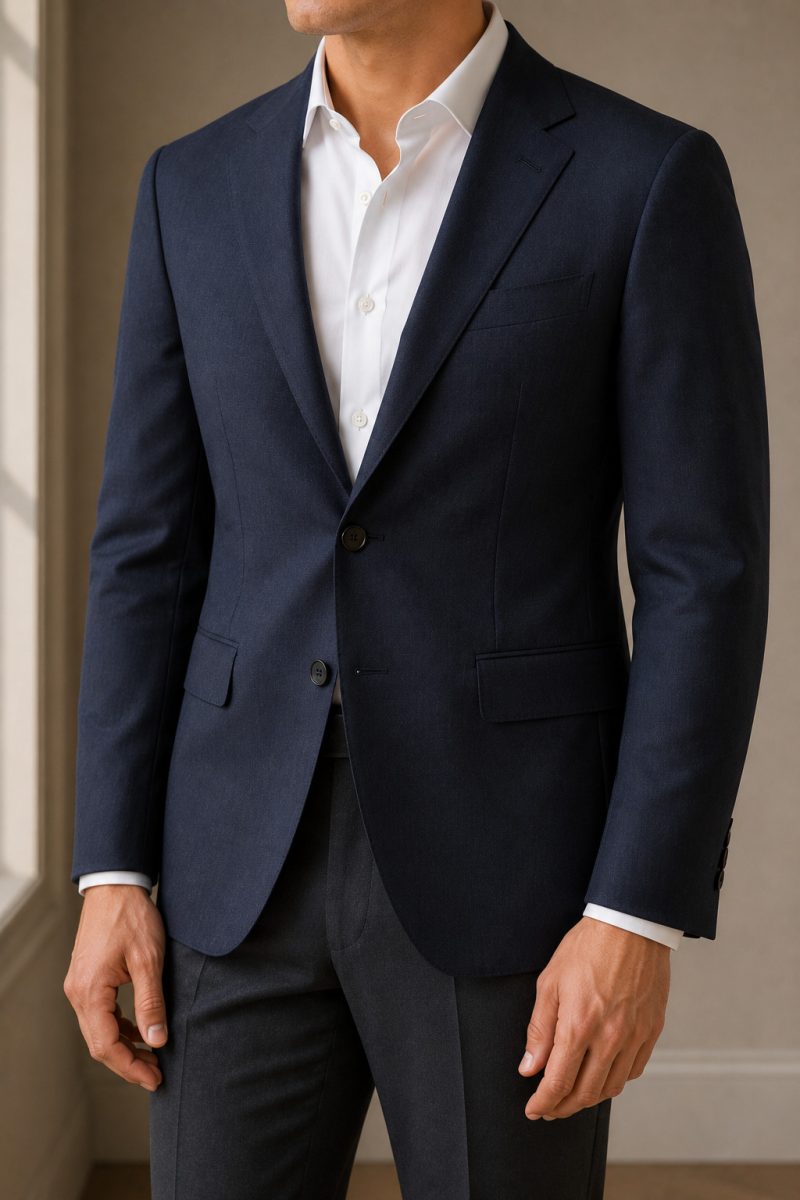
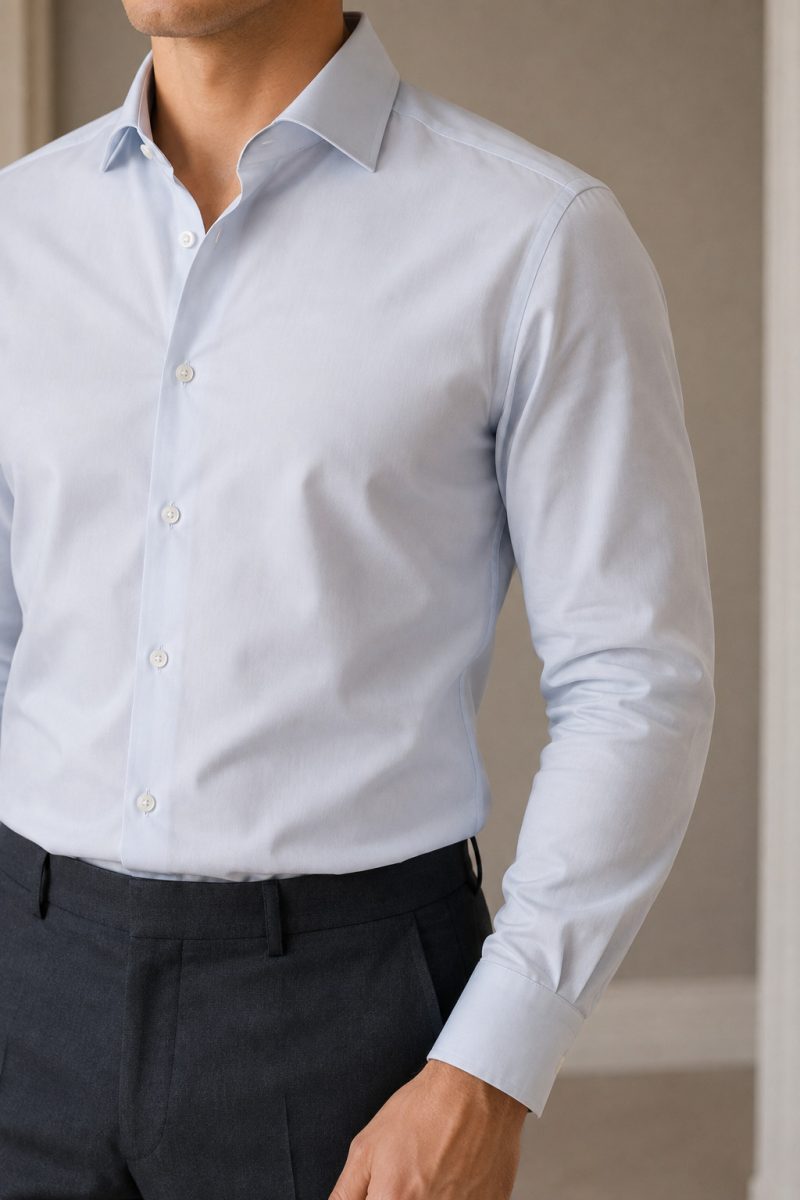
Start with the shoulder seam on the bony corner. Then the collar: buttoned, it should sit close to the neck without pressing in, and you should be able to slide a finger behind it and no more. A gaping collar under a tie is the most common thing I catch. The sleeve should end at the wrist bone so a strip of cuff shows under a jacket. Through the body, look for room to pinch a little fabric at the ribs, not a fistful.
Trousers
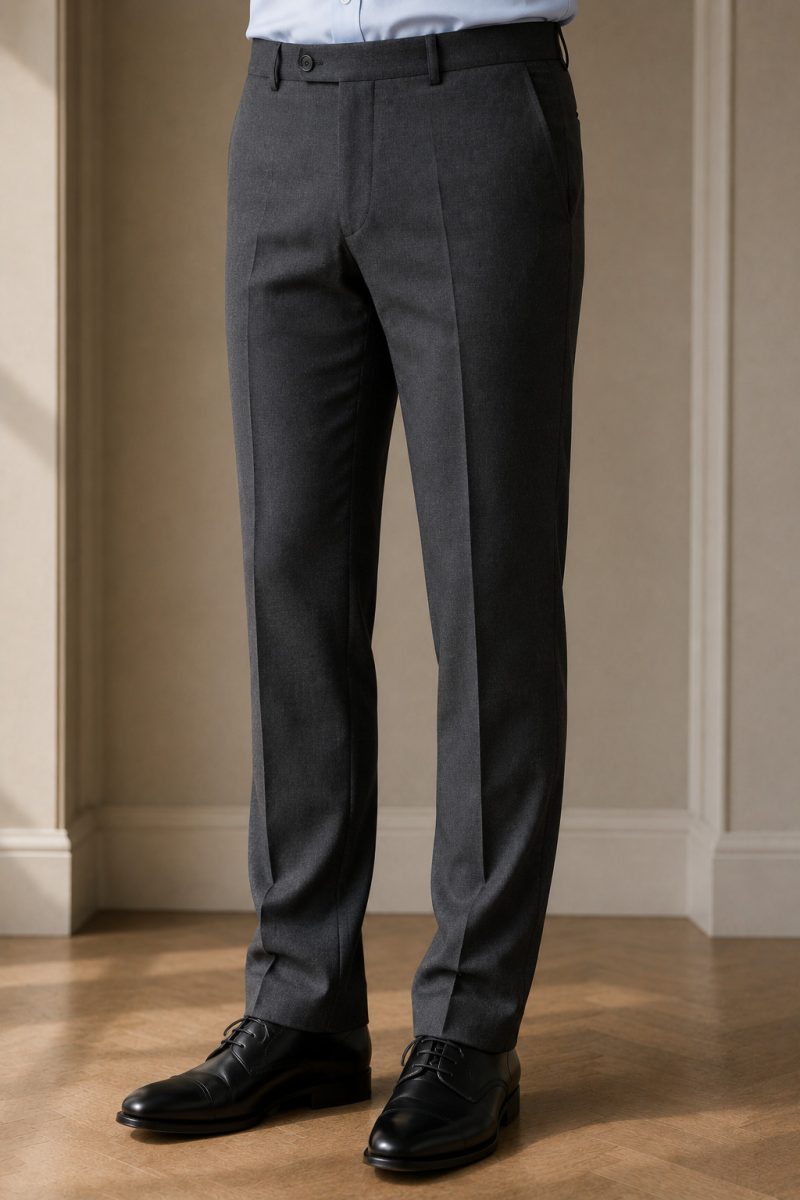
Rise decides everything else. Too short a rise and the waistband slides below his natural waist, the crotch pulls, and the seat sags. It should sit where his torso narrows and stay there without a belt doing the hard work. The seat follows his shape without cupping under it or hanging empty. The thigh skims rather than grips: horizontal wrinkles across the front mean it is straining. Most men wear a rise that is too low with a hem that is too long, which breaks the line of the trouser in two places.
Jackets and blazers
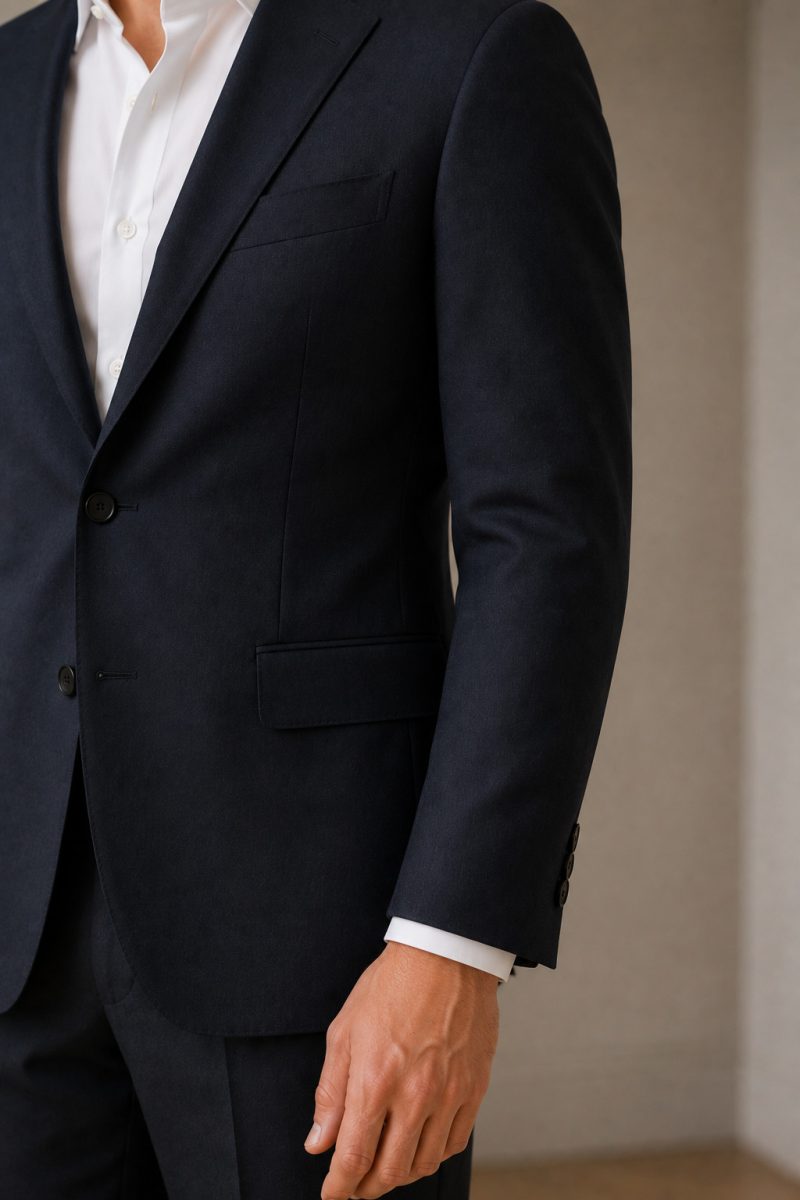
Shoulders first, always, because they are the one thing you cannot fix later. The seam lands on the corner and the sleeve head sits smooth, no divot and no bunching. Buttoned, the front closes without an X of tension radiating from the button, and the lapels lie flat against the chest instead of standing away. The sleeve stops above the shirt cuff so a sliver of shirt shows. Length covers the seat, and the jacket follows his torso rather than dropping straight like a box.
Knitwear
Sweaters forgive a lot, which is why so many men own bad ones. The shoulder seam still matters: dropped shoulders on a fine knit look sloppy, not relaxed. The body should follow his torso closely enough that a collar sits neatly above it and a jacket goes over the top without strain. Sleeves end at the wrist bone so the cuff does not swallow his hand. Watch the hem: it stops at the hip, not the middle of the seat, or the whole outfit reads bottom-heavy.
T-shirts
The tee is where fit is most visible, because there is nothing to hide behind. Shoulder seam on the corner. The sleeve should cut across the widest part of the bicep rather than flapping near the elbow, because a sleeve that reaches the elbow throws the proportion of the whole shirt off. The body skims the chest and drapes past the stomach without clinging. The hem lands short enough to tuck cleanly or leave out. A stretched neckline ages a shirt faster than any stain.
Outerwear
Coats are the one place I let the shoulder run slightly wide, because a coat has to clear a jacket or a heavy sweater. Have him try it on over what he actually wears underneath, not a tee, or you will bring home something he can never layer. He should be able to cross his arms and reach forward without the back seam straining, and the sleeve should cover the cuff beneath it. Length is a decision, not a rule: shorter reads casual, longer covers a suit jacket.
A fabric guide
Fabric decides how a well-cut garment behaves after hour one. Two shirts with the same pattern look different by dinner depending on the weave.
| Fabric | How It Wears | Best For | Watch Out For |
|---|---|---|---|
| Cotton poplin | Smooth, flat, crisp, quiet sheen | Dress shirts under a suit, formal events | Holds sharp creases; reads thin in pale colors |
| Oxford cloth | Textured basketweave, sturdy, softens with washing | Work shirts, weekend shirts, layering | Too casual under a formal suit; can feel warm |
| Linen | Loose, breathable, drapes away from the body | Hot weather, outdoor events, coastal dressing | Creases the moment he sits; sloppy in a loose cut |
| Merino wool | Fine, springy, holds shape and temperature | Sweaters, polos, travel layers, long days | Snags on watches and bags; wash gently |
| Worsted wool | Tightly spun, smooth, sheds wrinkles as he moves | Suits, dress trousers, evening blazers | Shiny patches at seat and elbows over time |
| Flannel | Brushed, soft, matte, visible depth | Cold weather trousers, shirts, jackets | Pills at friction points; too warm in heat |
| Chambray | Lightweight, denim-adjacent, soft faded blue | Casual shirts, weekend layers, under knits | Reads workwear; dark shades fade unevenly |
| Performance blend | Stretchy, wrinkle-resistant, quick drying | Travel, commuting, men who hate ironing | Can look plasticky in bright light; holds odor |
Linen is the only thing I want on a man in real heat, but it needs a clean cut so the rumple reads relaxed instead of careless. That is the trick behind the best warm weather looks for men. Flannel and brushed wool do the opposite job, and they carry cool weather outfits that look put together with no effort from him. If you like the quiet look behind classic heritage style, it is largely a fabric story: natural fibers, matte surfaces, nothing shiny.
Matching fit and fabric to the occasion
Work. Offices reward clothes that hold their shape all day: worsted wool trousers, poplin or oxford shirts, knitwear that layers flat. Fit runs closer here than anywhere else, because a workplace reads tailoring as competence whether or not that is fair. Build his rotation from business casual combinations that mix and match, then fill gaps with office outfit ideas that suit his actual building. Warm months change the math, and summer business casual options keep the silhouette without the heat.
Weddings and events. This is where fit gets photographed, so be strict. Shoulders correct, a sliver of cuff showing, trousers hemmed to a light break. Choose fabric for the room: worsted wool for an evening indoors, linen or a light blend for anything outdoors in summer. If you are coordinating everyone for family photos, matching fabric texture across people does more than matching colors ever will. The best date night outfits are the same logic in miniature: one well-fitted layer over something simple.
Casual weekends. Relaxed does not mean shapeless. Keep the shoulder seam honest and let fabric do the softening: chambray, washed oxford, brushed cotton, a sweater with some give. Denim can sit looser through the leg as long as the rise stays put. Most casual outfit ideas fail because the tee is too long and the jacket is too big, not because the pieces were wrong.
Travel. Pack fabrics that recover. Merino, performance blends, and worsted wool come out of a bag looking like clothes; linen and crisp poplin come out looking like laundry. Keep his travel rotation in one color family so everything layers, and let fit run slightly relaxed for long flights.
The fit check
Do this while it is still on him, in decent light, before tags come off. It takes under a minute and it is the core of any useful mens fit guide.
Press the shoulder seam. Put your finger on the bony corner and see where the seam lands. On the corner is right. Inside it means the garment is pulling. Outside it means the sleeve will droop, and no tailor will save it.
Check the collar gap. With a jacket on, the collar should rest against his shirt collar and stay there. Air behind it, or a collar that rides up when he walks, means the jacket does not sit on his frame.
Find the wrist bone. Have him drop his arms. The shirt sleeve should end at the wrist bone and the jacket sleeve above it. If the shirt cuff covers his hand, that is a fix, not a dealbreaker.
Look at the seat. Walk behind him. The trousers should follow his shape with no horizontal pull lines under the seat and no slack fabric hanging below it. Either one means the rise or the cut is wrong.
Have him raise his arms. Straight overhead, then forward like he is reaching for a door. The garment should not climb his body or lock him in place. Some lift is normal in a jacket. Being unable to hug someone at a wedding is not.
What tailoring fixes and what it does not
A tailor does more than most people assume and less than most hope. Buy for the parts that cannot change and alter the rest.
Sleeve shortening is routine. Shirt and jacket sleeves come up easily, and jacket sleeves can often be lengthened if there is fabric folded inside the cuff. Working buttonholes complicate it, but a good tailor still has options.
Taking in a waist is routine. Shirts can be slimmed through the body, jackets shaped at the side seams, trousers brought in at the back. This alteration transforms the most garments, which is why you buy to fit the shoulders and chest first and adjust the waist after.
Trouser hemming is non-negotiable. Almost no man is wearing trousers at the correct length off the rack, and hemming changes his proportions more than anything else here. Decide the break first, then have them pinned while he wears the right shoes.
Shoulders are the exception. Reworking a jacket shoulder means removing the sleeve, rebuilding the padding and canvas underneath, and setting it back in. Even done well, the balance rarely returns. If the shoulders are wrong, put the jacket back on the rack. That is the whole rule.
FAQ
How should a mens shirt fit in the shoulders?
The seam should land on the bony corner where his shoulder stops and his arm begins to turn down. Inside that point you get diagonal drag lines from the armhole; outside it you get a soft fold collapsing onto the arm. Shirt shoulders are hard to alter, so this is a buying decision.
What is the correct trouser break?
A light break, where the hem just touches the shoe and makes one soft fold, is the most versatile and the easiest to get right. No break, with the hem stopping at the shoe in a clean line, suits narrower cuts and warm weather. Anything longer stacks fabric at the ankle and shortens the line of the trouser.
How do I know if a blazer fits?
Button it and check three things: shoulder seams on the corners, no X of tension pulling from the button, and lapels lying flat against the chest instead of standing away. Then make sure the collar stays against his shirt collar when he moves. If those pass, everything else can be adjusted.
What fabric is best for a summer wedding?
For an outdoor ceremony in real heat, linen or a linen blend breathes best and looks right in bright light, as long as you accept the creasing. For an indoor reception or anything heavily photographed, a lightweight worsted wool holds its shape better. A cotton and linen blend is my usual compromise.
None of this requires him to care about clothes. It requires one person in the house to know where the shoulder seam belongs and what a fabric does by hour six. Start with the shoulders, hem the trousers, and let the fabric handle the rest of the day.

About the Author
Allena Rissa
Founder & Editor
Allena Rissa is the founder and editor of The Better Fit. She has been writing about clothes since she was twenty-two, and for nine years she has been the one dressing her husband, her kids, and herself for family photos, fall weddings, work conferences, and Christmas cards that had to land. On the site she covers five pillars: Her Style, His Style, Together, Occasions, and Foundation, the bras and fit mechanics that started it all. Her advice has been featured in Cosmopolitan, Better Homes & Gardens, Insider, and NBC.