As an Amazon Associate we earn from qualifying purchases.
The suitcase tells the truth. Every October I pull the carry on down, and within ten minutes I know whether the closet behind me is actually organized or just full.
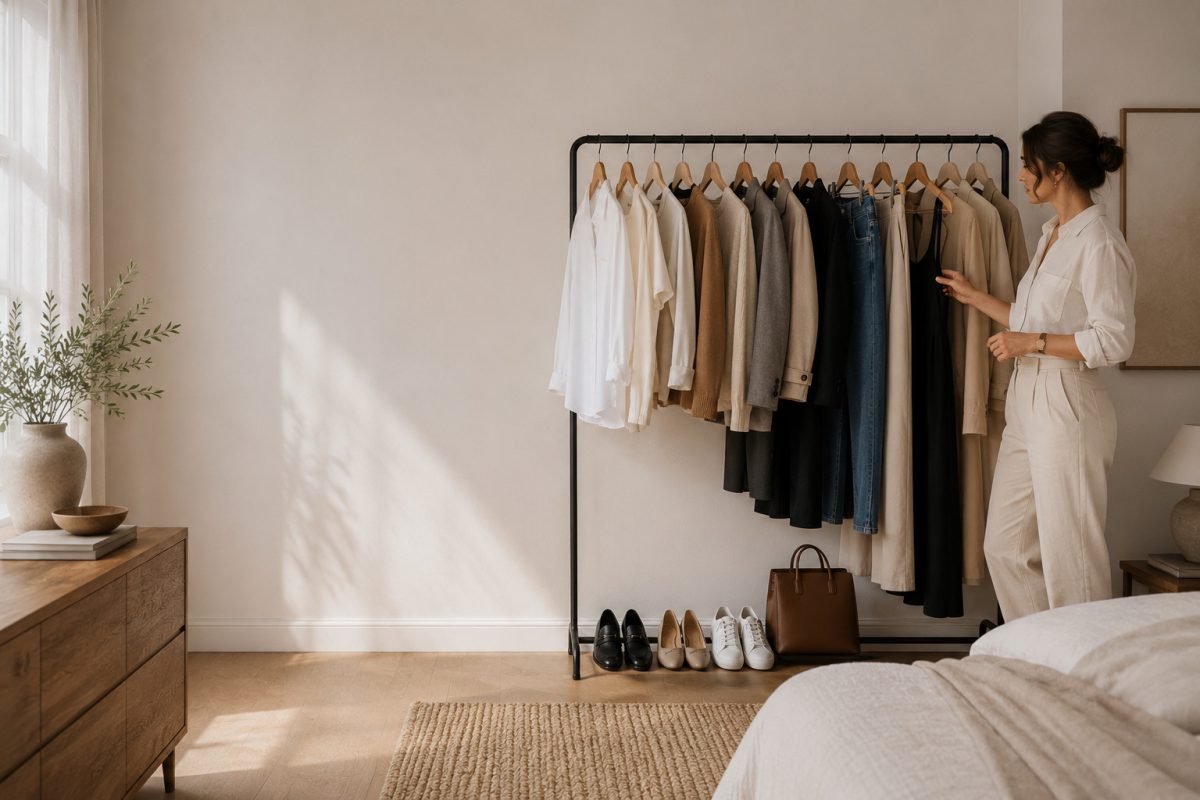
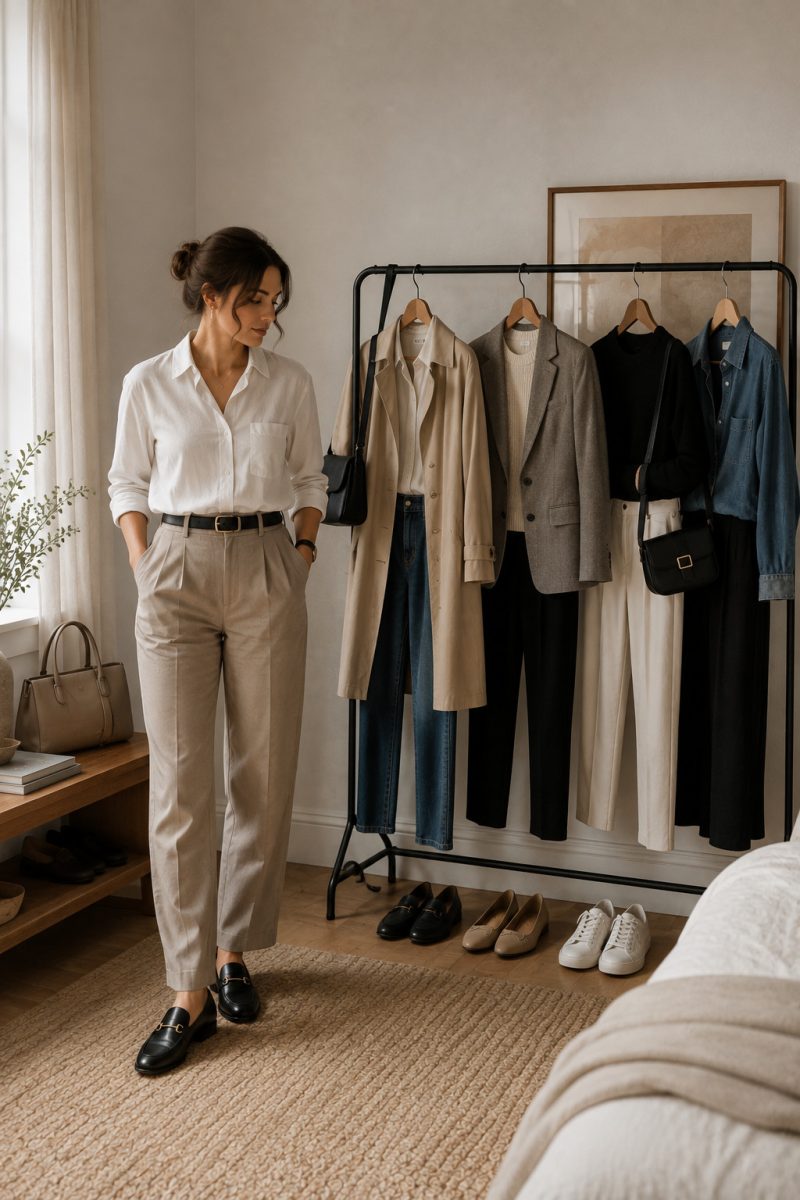
So what is a capsule wardrobe? It is a small, deliberately chosen set of clothes, usually somewhere between twenty five and forty pieces, selected so that almost every top works with almost every bottom, layer, and pair of shoes. A capsule wardrobe is not a minimalism contest and it is not a fixed shopping list. It is a system for getting dressed fast in clothes that fit you and match the week you actually have. It is also why that suitcase went easy: pulling together vacation outfits for any destination or airport outfits for fall travel stops being a project once your pieces already agree with each other.
What a capsule wardrobe actually is
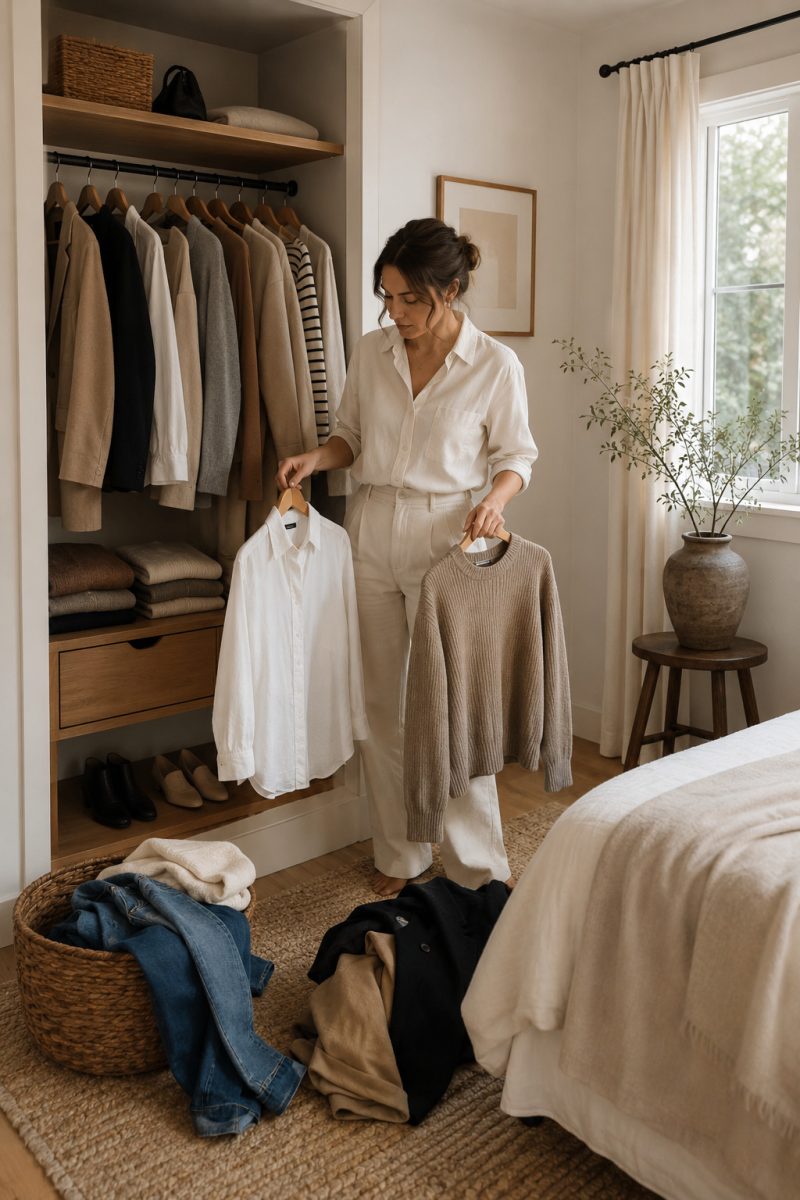
Strip away the aesthetic photos and the concept is simple. You pick a limited number of garments in a color story that agrees with itself, in silhouettes that fit you well, in fabrics you will genuinely wear, and you commit to that group for a season. Everything in it has to earn its spot by working with at least three other things you own. If a top only works with one skirt, it is not a capsule piece. It is a single outfit hanging in your closet.
The commonly cited history credits London boutique owner Susie Faux with coining the term in the 1970s. Her argument was that a woman needed a small collection of garments that did not go out of style, refreshed each season with a few current pieces. The idea is generally said to have reached a much wider audience in 1985, when designer Donna Karan launched her “Seven Easy Pieces” collection and showed how a handful of interchangeable garments could carry a working woman through an entire day. That is the version of the story most style writers repeat, and whether or not the timeline is exact, the underlying principle has held up for decades.
Here is what a capsule is not. It is not a uniform of black and gray, unless black and gray are what you love. It is not a vow to never shop again. And it is not the same thing as owning very little. There is real overlap with a minimalist approach to dressing, but a capsule can be colorful, patterned, and personal. The discipline is in the compatibility, not in the austerity.
How many pieces a capsule wardrobe should have
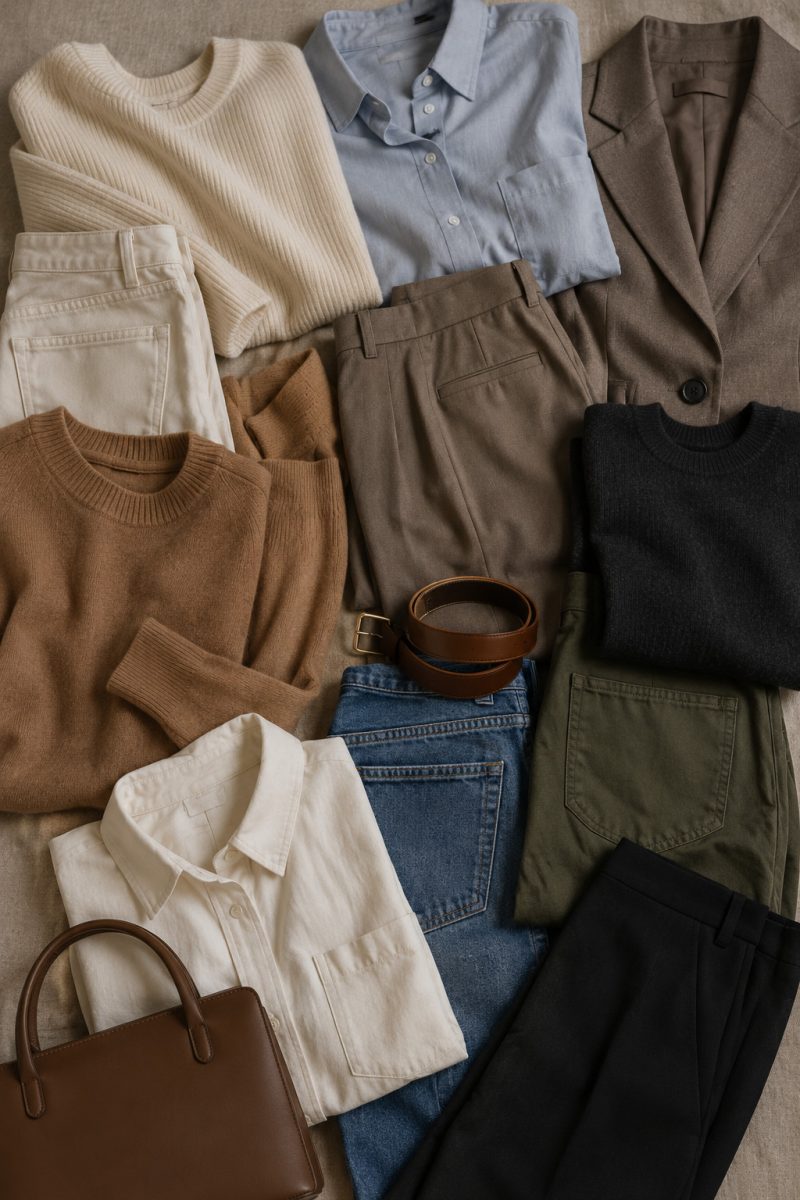
Give me a number and I will give you one: twenty five to forty pieces per season, counting tops, bottoms, dresses, layers, outerwear, and shoes, and not counting underwear, sleepwear, or workout clothes. If you are building your first capsule, start at the higher end. Starting lean is how people quit in week two.
But the number is the least interesting part of capsule wardrobe basics, and I will take a position on this: the ratio matters far more than the count. A closet with eighteen tops and three bottoms is not a capsule, it is a top collection with a scheduling problem. The proportion I recommend is roughly two tops for every bottom, three to five layering pieces, one or two dresses if you wear dresses, and three to four pairs of shoes that cover walking, working, and going out.
The reason is arithmetic. Nine tops and five bottoms that all coordinate produce forty five combinations before you add a single layer, and three toppers push that well past a hundred. When someone tells me their capsule feels repetitive, the problem is almost never that they need more shirts. It is that the bottoms and the layers are thin.
The core pieces, by category
Treat this as a capsule wardrobe checklist to react to, not a list to reproduce. Read the third column first. If a category does not earn its place in your life, cut it and add depth somewhere else.
| Category | What to Include | Why It Earns Its Place |
|---|---|---|
| Foundation tops | Fitted knit tees and a long sleeve version in your two best neutrals, plus a fine gauge knit | These sit under everything. Smooth fabric and a clean neckline mean layers close over them without bulk or bunching at the waistband. |
| Statement tops | One or two blouses with a detail you like: a soft drape, a pleat, a print pulled from your color story | They do the work of an accessory. One of these turns the same trousers into a different outfit without adding a second bottom. |
| Everyday bottoms | A dark straight or wide leg denim, a second denim in a lighter wash, a knit or woven casual pant | Bottoms are the constraint in most closets. Two washes read as two entirely different levels of dressed. |
| Structured bottoms | A tailored trouser, plus either a skirt or a second trouser in a different fabric | Fabric, not color, is what separates weekend from meeting. A crisp trouser makes a plain tee look intentional. |
| Dresses and one pieces | One easy day dress, one dress that handles a dinner or an event | A dress is a complete outfit with no decisions in it. On a rushed morning that is the whole point. |
| Layers | A cardigan, a blazer, and a relaxed overshirt or knit vest | Layers are the multiplier. Three toppers over nine tops is where a small closet stops feeling small. |
| Outerwear | One weatherproof coat, one lighter jacket in a shape that fits over a blazer | If your coat will not close over your layers, half your outfits stop working the moment it gets cold. |
| Shoes | A clean sneaker, a flat or loafer, a boot or heel suited to your climate | Shoes set the register of the outfit. They are also the fastest way to make one pair of jeans work for three occasions. |
| Bags and accessories | One everyday bag, one smaller evening bag, a belt, two or three pieces of jewelry you never take off | Small volume, high leverage. These are what keep a repeated outfit from looking repeated. |
How to build one from the closet you already have
Almost everyone starts this backward. They read a list, decide their closet is wrong, and go shopping. I want you to do the opposite, because how to build a capsule wardrobe well is mostly an editing problem, not an acquiring one.
Start with a two week audit, and make it evidence based rather than memory based. Turn every hanger backward. When you wear something and hang it back up, turn the hanger the right way around. Photograph each outfit with your phone before you leave the house, quickly and badly, no styling. After two weeks the photos and the hangers tell you exactly what you reach for, and the answer is always narrower than people expect. Most of us rotate a fraction of what we own and keep the rest out of guilt or hope.
Now pull everything that got worn and lay it out. Look for what repeats: the neckline, the rise, the sleeve length, the fabric weight, the two or three colors that keep showing up. That repetition is your actual style, not the one on your mood board, and it is the reason outfits for women over 40 tend to get sharper rather than narrower. Build the capsule around it. Then look at the pile that never moved and be honest about why. Wrong fit, wrong fabric, wrong life covers almost all of it.
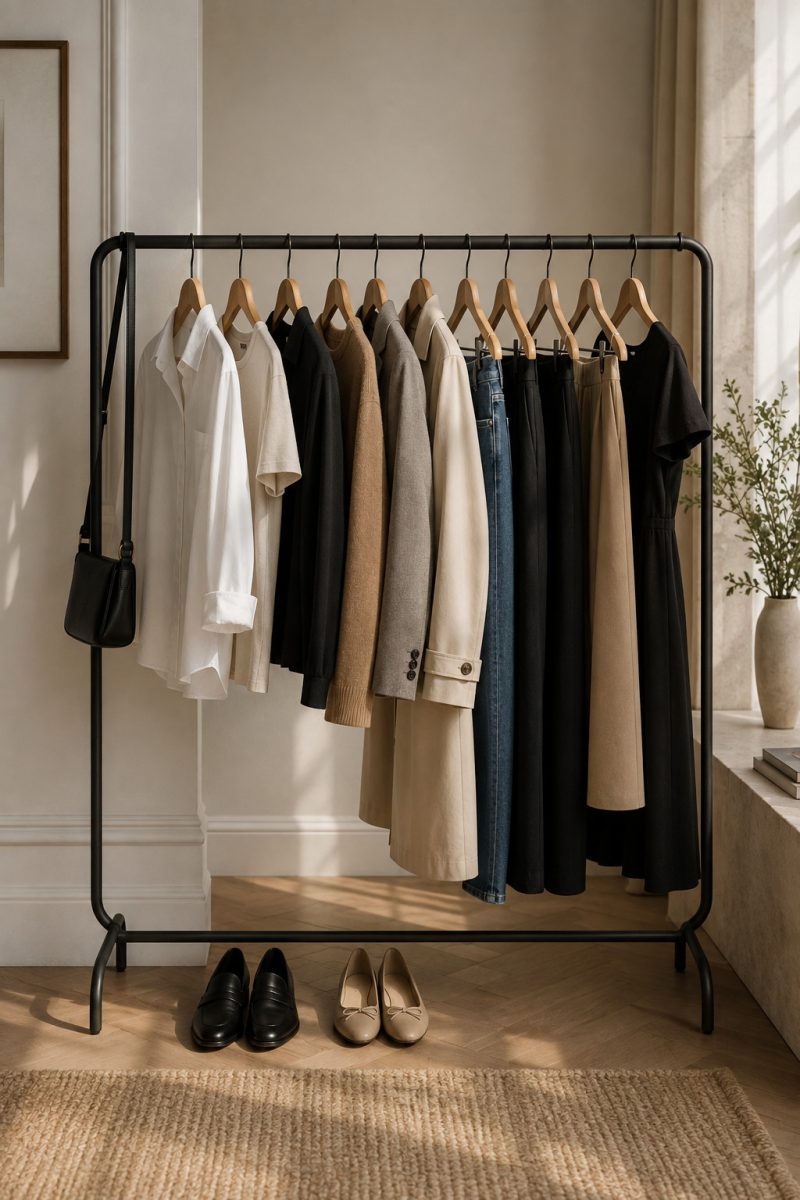
Next, identify the gaps by function rather than by category. Do not write “need a white shirt.” Write “I have nothing to wear on a day with a client meeting in the morning and school pickup at three.” Functions expose real holes. Categories just generate shopping. If your week is mostly office based, the capsule has to carry work outfits for women first and everything else second, because that is where the pressure sits. I keep a running note of office outfit ideas built only from pieces I already own, and when I cannot fill a slot from that note, that is a genuine gap worth shopping for.
Then run the one season trial. Box up everything that did not make the capsule and put the box somewhere annoying to reach, like a high shelf. Do not donate it yet. Live with the capsule for a full season and keep a running list of every moment you felt stuck. If you dig in the box, note what you pulled out and why. At the end, the list tells you what to add and the untouched box tells you what to release. It works because it is built on what happened instead of what you imagined would happen.
Building for the season
A capsule is not built once. It is rebuilt, and I do mine on a seasonal rhythm rather than a calendar date, usually when the weather forces the change and I catch myself reaching past the same three things every morning. Two rebuilds a year is the minimum in most climates. Four is better if you live somewhere with a real spring and fall. The awkward stretch is the end of August, when late summer outfits stop feeling right but the coats are still too much, and the fix is a short bridge of summer to fall transition outfits rather than a full swap.
What changes is less dramatic than people expect. Your bottoms, your outerwear, and your shoes carry most of the seasonal shift. Your tops mostly stay. A summer capsule wardrobe leans on breathable woven fabrics, shorter sleeves, dresses doing more of the heavy lifting, and sandals in place of boots. Layers do not disappear in summer, they get lighter: a linen overshirt for aggressive air conditioning does the same structural job a cardigan does in November. Done right, the same nine or ten pieces cover casual summer outfits and a dinner reservation.
Cold weather flips the emphasis. A fall capsule wardrobe needs more layering pieces and fewer standalone tops, because the visible layer becomes the outfit. This is where the coat rule matters most. Choose your knits and blazers first, then choose outerwear that closes comfortably over them. That sequence is what lets one capsule produce both casual fall outfit ideas for a Saturday and the cozy fall outfits you actually want on a cold Tuesday. I have watched more cold weather capsules fail because of a coat that fit over a tee and nothing else than for any other reason.
Keep a small core that never rotates out. Mine is the tailored trousers, the dark denim, the blazer, and the loafers. Everything else moves in and out, which is what makes the swap take an afternoon.
The mistakes that make capsules fail
Buying the checklist instead of shopping your closet. Every capsule guide, including the table above, is written for a general reader. You are a specific one. When you buy a list wholesale, you end up with a closet full of items that suit a stranger’s climate, job, and body. Shop your own closet first and let the gaps announce themselves after a season of wear.
Choosing pieces that only work in one outfit. This is the quiet killer. The blouse with the dramatic sleeve that will not go under a blazer. The pant in a color that agrees with exactly one top. Before anything joins the capsule, name three complete outfits it belongs to, using only pieces you already own. If you cannot name three, it is a lovely garment and it does not belong here.
Ignoring fit because the piece is technically correct. A trouser that meets the definition of a tailored trouser but pulls across the hip will not get worn, and no amount of it being on the list will change that. A capsule exposes this fast, because you wear the same bottoms every week. This is the one that matters most. I would rather you carry twenty pieces that fit than thirty five that are correct on paper.
Treating it as a rule set instead of a starting point. I have seen women refuse to wear something they loved because it was not in the capsule that season. That is the tail wagging the dog. The capsule exists to make mornings easier, and if a rule is making your mornings harder, break the rule and adjust the system.
Building around an aspirational life. Most audits turn up a closet organized around the week someone wishes they had: more dinners out, fewer school runs, a dress code that left the building years ago. Dress the calendar you actually keep.
Frequently asked questions
How many items are in a capsule wardrobe?
Most capsules land between twenty five and forty pieces per season, counting tops, bottoms, dresses, layers, outerwear, and shoes. Underwear, sleepwear, workout clothes, and special occasion pieces are usually excluded. If you are new to this, start closer to forty and edit down after a season of real wear rather than guessing on day one.
What is the 5 piece French wardrobe?
It is a shopping rule that circulates widely in French style blogs and forums: keep a stable foundation of basics you replace as they wear out, then allow yourself only five new standout pieces each season. The point is to slow the decision down so each addition is something you genuinely want. It pairs well with a capsule, since the foundation does the daily work and the five pieces keep it feeling current.
Does a capsule wardrobe include shoes?
Yes, and I count them. Shoes change the formality of an entire outfit, so leaving them out of the plan means half your combinations are theoretical. Three to four pairs covering walking, working, and evening is usually enough, and they should sit inside the same color story as everything else.
How often should you change a capsule wardrobe?
Rebuild seasonally, which for most people means two to four times a year depending on climate. Between rebuilds, resist tinkering, because the trial only teaches you something if you let it run. Keep a running note of what felt missing and use that note at the swap instead of shopping mid season.
A capsule wardrobe is not about owning less for its own sake. It is about knowing what you own, trusting that it fits, and reclaiming the ten minutes you currently spend staring at a full closet with nothing to wear. Start with the two week audit. The closet you already have will tell you most of what you need to know.

About the Author
Jess Jackson
Contributing Style & Fit Creator · Amazon Influencer
Jess Jackson is a U.S. Army veteran and a contributing style and fit creator for The Better Fit, working alongside founder Allena Rissa. She shows on camera what most style writers only describe: how a piece actually fits, how it moves, and how it holds up through a real week of wear. Since joining the Amazon Influencer Program in early 2026 she has filmed hundreds of shoppable try-on videos, earning Gold Creator status and recognition as a Rising contributor in the Viral Vue creator community. Her storefront, A Lived-In Home, covers fashion, beauty, wellness, and family finds.