
As an Amazon Associate we earn from qualifying purchases.
The email said the office was moving to “elevated business casual.” No examples, no definition. Four people asked HR what it meant, HR said “use your judgment,” and on Monday the same floor held a woman in a full suit, a man in a quarter zip, and someone in a knit dress and sneakers. All three thought they had read the email correctly. Technically, all three had.
That is the real problem with dressing for work, and it is rarely about taste. It is about decoding a standard nobody wrote down, then finding clothes that hold it through a commute, a chair, and a conference room set to arctic. I spent years in a uniform where the rules were printed and enforced. The civilian version is harder, because the rules are real but invisible.
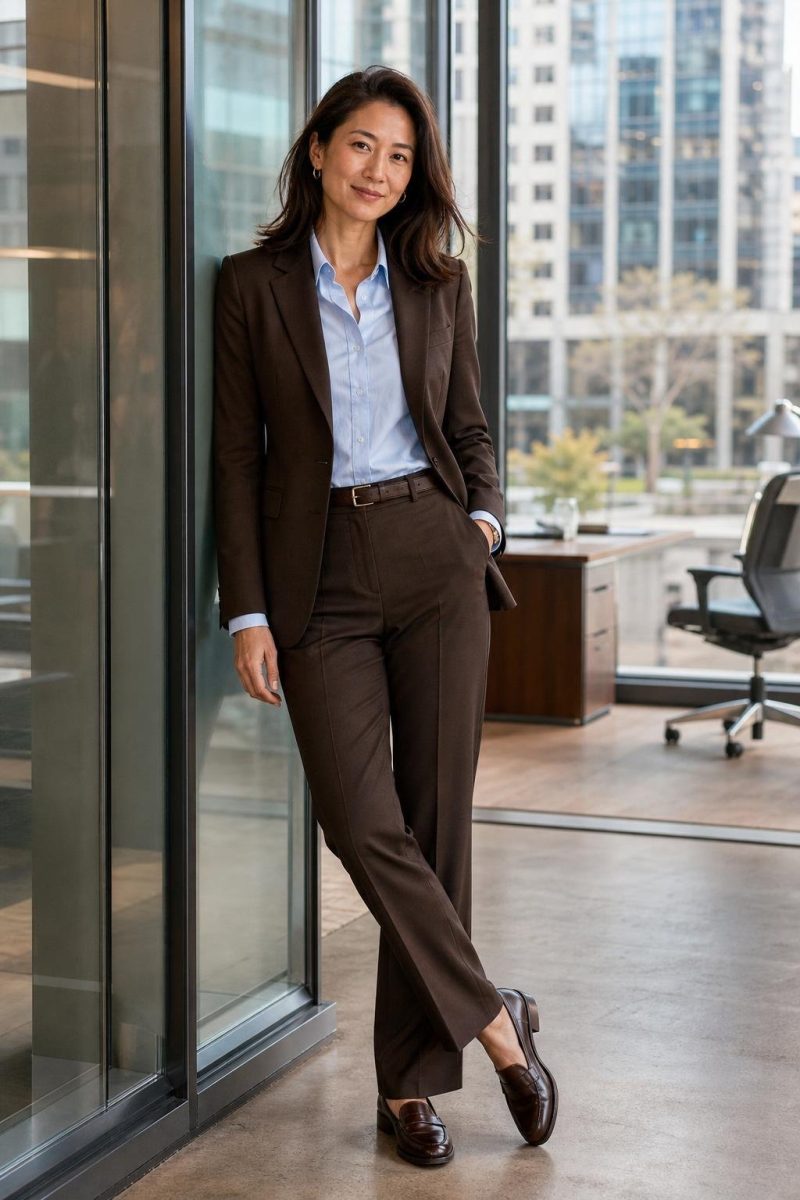
Decoding the workplace dress codes
Five terms cover almost every workplace. Each rung is defined by structure: how much of the outfit is tailored, and how formal the shoe is. Name your rung and the guesswork mostly disappears, which turns roundups of work outfits for women from a random pile into categories.
Business Formal
The top rung, and rare: law firms, some finance roles, court, board presentations. The signal is a matched suit, meaning jacket and trousers or jacket and skirt cut from the same fabric, with a collared shirt or fine knit shell and a closed leather shoe. Color runs dark and quiet, and fabric matters more here than anywhere, because a suit in a limp fabric reads as a costume of a suit.
The common misread: assuming a blazer plus trousers equals a suit. Different fabric or color means separates, and in a genuinely formal room that gap is visible from across the table.
Business Professional
The everyday version of formal, and where many client facing offices live. Tailored separates rather than a matched suit: a blazer with trousers in another color, a structured dress, a skirt with a tucked blouse, a polished closed shoe. What holds it together is that everything is pressed and no piece is casual in construction.
The common misread: denim. People assume dark denim counts because it is dark. Denim is a construction, not a color: the topstitching and rivets read casual however deep the indigo is.
Business Casual
The largest and vaguest category. My working definition: no suit required, but every piece would still look correct in a meeting. Trousers, midi skirts, knit dresses, button downs, fine gauge sweaters, blazers optional, loafers or a block heel. This is where most office outfit ideas land, and where fit does the most work. The polish comes from clothes sitting correctly: shoulder seams where your shoulders are, a hem that hits the same spot every time.
The common misread: treating it as “anything that is not a t-shirt.” Business casual has a floor. Athletic fabrics, visible logos, and anything you would wear to the gym sit under it.
Smart Casual
Business casual with the meeting requirement removed and personality allowed back in. Dark denim is usually fine, along with printed shirts, interesting knits, and leather sneakers in good condition. The rule is that one element stays deliberately polished: a real jacket, a leather shoe, a belted waist.
The common misread: skipping the polished element. Smart casual without the smart part is just casual, and the gap shows up fastest in shoes.
Casual
Genuinely casual workplaces exist: warehouses, labs, remote first companies. The standard here is condition rather than category. Nothing stained, nothing stretched out at the neck, nothing with a hole that is not a design choice.
The common misread: believing casual has no ceiling. These offices still get visits from clients and auditors, and the people caught flat own nothing between a hoodie and a wedding outfit. One jacket and one clean pair of trousers solves it.
Reading the actual dress code of your workplace, which is rarely the written one
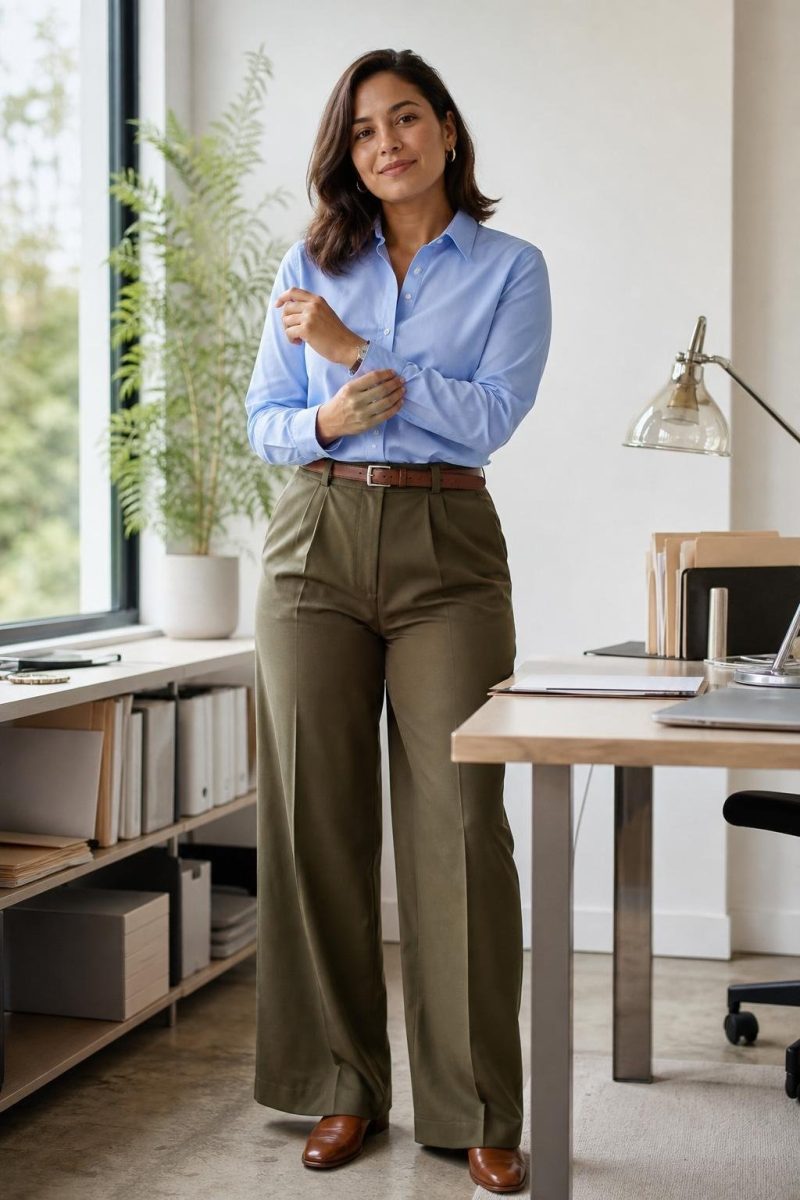
Written codes describe the outer boundary. The real code is the narrower band people actually wear, and you can map it in two weeks without asking anyone.
Watch the person one level above you. Not the CEO, who is often exempt, and not your peers, who are guessing too. One rung up is dressing for the job you want, which makes their baseline the most accurate target in the building. Watch their shoes and outerwear, which carry more signal than tops.
Watch visitor days. When clients, auditors, or candidates come in, the whole floor shifts up a notch, and that shift is the office’s aspirational standard. Own two or three outfits that meet it.
Notice what nobody wears. If you have never seen a bare shoulder, a short hem, an open toe, or a sneaker on that floor, those are absent for a reason, whether the handbook says so or not. Absence is the code, and it runs both ways: if nobody owns a tie, a full suit reads as strange rather than serious.
One aside. The men around you work from a narrower ladder with clearer rungs, so business casual outfits for men and men’s office outfit ideas are useful reference points. If the men on your team wear collared shirts and leather shoes daily, that is your floor too.
Dressing for a day your clothes have to survive
An outfit that looks correct in your mirror at seven in the morning has not been tested yet. The test is a car seat, four hours in a chair, a lunch you ate too fast, and a thermostat set by someone who is not you.
Fabrics that do not fold in a chair
Sitting wrinkles clothes, not walking. The creasing lands across the lap, at the hip, and behind the knee, and some fabrics recover while others hold the fold all day. Wool and wool blends recover best, because the fiber has a natural spring and creases fall out while you stand at the copier. Ponte, double knit, and structured jersey behave the same way, and crepe is reliable. Twill recovers better than a flat weave in the same fiber.
What crumples and stays crumpled: linen, rayon and viscose, cotton poplin, most flat weave shirting. That is not a ban, just a matter of knowing what you signed up for. I wear linen in July, never on a presentation day.
The field test takes five seconds. Squeeze a handful of fabric hard, hold, let go. If the wrinkles vanish while you watch, that garment survives a workday. If they set, you will spend the afternoon compensating.
Colors and weaves that forgive a spill
Everyone thinks about color here and forgets texture, which matters more. A flat, smooth, light solid is the worst surface for a coffee incident, because the eye has nothing to get lost in. Texture is camouflage: tweed, herringbone, small tonal prints, and heathered knits break up a mark until it stops reading as one.
Mid tones beat both extremes. Very dark solids show lint, dust, and every deodorant streak, and very light solids show everything else. Camel, olive, medium gray, and rust quietly absorb a normal day. If you commute with coffee, make the piece nearest your chest the textured one.
Shoes for a day with walking in it
Most work shoes are chosen while standing still on carpet. The real day has a parking garage, stairs, and hard floors.
I want a stable base and a sole with substance. A block heel, wedge, or low stacked heel spreads weight over a wide contact patch, so your foot is not fighting for balance. A thin sole sends every hard floor into your heel and knees, which surfaces by mid afternoon as fatigue you blame on your job. A back that grips without pinching matters too, because a shoe slipping at the heel makes you claw with your toes, and that is where the burning at four o’clock comes from.
Layering for a building nobody can regulate
Office climate is a negotiation you will not win. Dress for the building rather than the weather: a base layer you are comfortable in alone, a mid layer you can remove without rearranging the outfit, and something that lives permanently at your desk.
The mid layer is what people get wrong. A cardigan or unlined blazer works because removing it leaves a finished outfit underneath. A layer that reveals a camisole or a wrinkled shell is not a layer, it is a cover, and you will wear it through the warm hours anyway. That build quietly underpins most outfits for women over 40 that keep working across a full calendar.
Standing all day

If you teach, nurse, work a floor, cut hair, or run a register, your clothes are equipment, and the failure points differ from a desk job.
Shoe construction is the whole game. Look for cushioning through the midsole, not just a soft insole over a hard base. A slight rise at the back takes strain off the calf better than a flat sole. A firm heel counter, the stiff cup behind your heel, stops your foot rolling with every step. Test it by pinching: if it folds in your fingers, it will fold under you. Leather and knit uppers move with your foot; stiff synthetics hold one hot spot for hours.
Fit slightly loose, not snug. Feet swell over a long day on hard floors, so a shoe that fits at eight is tight by two. Try shoes on late in the day, in your work socks, and leave room at the front. Waistbands and cuffs follow the same rule, which is why the fall teacher outfits people actually repeat are built on knits and elastic backed waists.
Hems and sleeves have to stay where you put them. A standing job means reaching high, crouching to a child’s eye level, bending over a counter, lifting. A skirt that needs a hand to manage is a skirt you will fight all day. Do the reach test in the fitting room: both arms straight up, then bend forward. Anything that migrates there will migrate at work. Anyone shopping for outfits for tall women knows this doubles, since hems that are borderline on the rack go short the first time you reach.
What holds up, by work setting
| Work Setting | What Carries It | What Fails By Afternoon |
|---|---|---|
| Corporate office | Wool blend trousers, structured blazer, closed leather shoe with a low block heel | Flat weave shirting that creases at the elbow, thin soled pumps |
| Hybrid or business casual office | Ponte or twill trousers, knit dress with a cardigan, loafers, textured knits | Rayon blouses holding every chair crease, stiff waistbands, shoes chosen for one short walk |
| Classroom | Stretch knit dresses, elastic backed trousers, cushioned low profile shoes, pockets | Wrap dresses that shift when you crouch, sleeves sliding down, hard soled flats |
| Healthcare or clinical | Durable knit layers, supportive shoes with a firm heel counter, nothing dangling | Loose necklines when leaning over patients, unsupportive slip ons, light solids |
| Retail or client facing | Dark textured trousers or a midi skirt, a layer you can drop, shoes with a real sole | Snug shoes bought in the morning, tops that ride up at high shelves |
| Creative studio | Dark denim with a structured jacket, leather sneakers in good condition, one polished element | Worn sneakers, oversized layers with no shape, anything that reads as unprepared |
Dressing for campus
Campus is closer to a standing job than to an office: a bag with weight in it, a walk between buildings in whatever the weather is doing, a freezing lecture hall, a lab that is not, and hours of chairs.
The shoulder your bag sits on decides your top, because a delicate strap, a wide neckline, or a fabric that pills gets wrecked by midterms. Layers have to be carryable, so a packable jacket beats a coat you will resent hauling by noon. The best back to college outfits walk a mile, survive four hours of chairs, and still work when someone suggests dinner. Teaching assistants and anyone presenting should keep a jacket in reserve.
Building a work rotation that does not require thinking
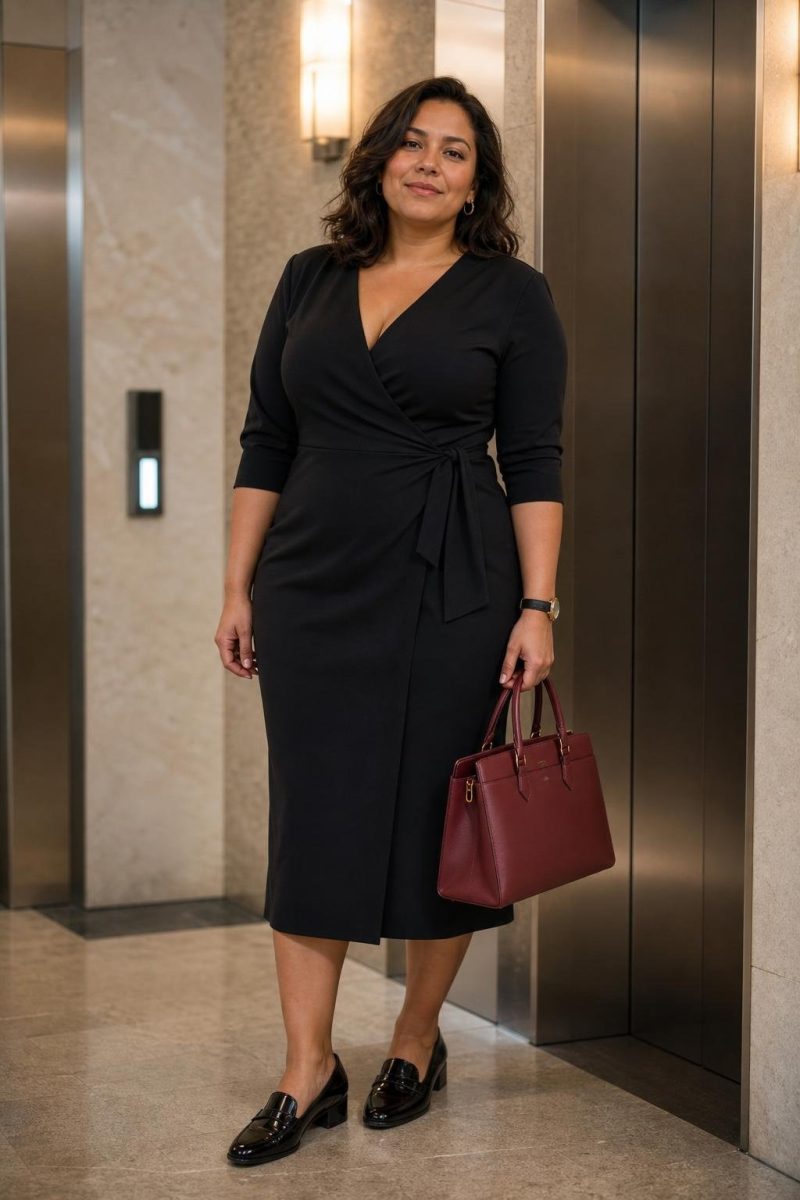
The best dressed people I have worked with were not the most creative. They repeated. They had combinations that worked and spent their energy on the job. Novelty is not a professional virtue. Consistency is.
A workable rotation is small: two or three bottoms in colors that go with everything, four or five tops that work with all of them, one jacket, two pairs of shoes, and one layer at your desk. That fills a work week without an exact repeat, which is the logic behind a fall capsule wardrobe applied to a narrower purpose.
- Pick a base neutral and make every bottom obey it.
- Let the tops carry the color and keep the bottoms quiet.
- Own one jacket that goes over the whole rotation and lives by the door.
- Keep two shoe options with different heel constructions and alternate them.
- Name three go to combinations and default to them on hard days.
Repetition is a feature. Wearing a small set often teaches you how each piece behaves: which trousers crease, which sweater pills under a crossbody strap. It is also why a minimalist capsule wardrobe guide works so well for work: a small rotation gets tested constantly, and what fails gets removed. Note failures the evening they happen.
Frequently asked questions
What is the difference between business casual and smart casual?
Business casual means every piece would still look right in a meeting, so denim, sneakers, and loud prints sit outside it. Smart casual drops the meeting requirement, provided one element stays deliberately polished. The quickest test is the shoe: business casual wants leather, smart casual accepts a clean sneaker.
What should you not wear to work?
The consistent failures are clothing in poor condition, athletic and beachwear fabrics, anything you have to keep adjusting, and shoes you cannot walk in. Beyond that, the real answer is whatever nobody in your building wears. When unsure, go one small step above the room.
What shoes are best for standing all day?
Look for cushioning through the whole midsole, a firm heel counter that does not collapse when you pinch it, and a slight rise at the back rather than a flat sole. Fit them late in the day, once your feet have swelled, and take the roomier option. Alternating two pairs does more than any single pair can.
How many work outfits do you actually need?
Far fewer than most closets hold. Two or three bottoms, four or five tops that work with all of them, one jacket, and two pairs of shoes cover a work week without an exact repeat. Add two that meet your office’s visitor day standard and you are set.
Dressing for work well means paying attention twice: to the room, to learn the standard nobody wrote down, and to your own day, to learn which clothes survive it. Do both for a season and the morning decision stops being one.

About the Author
Jess Jackson
Contributing Style & Fit Creator · Amazon Influencer
Jess Jackson is a U.S. Army veteran and a contributing style and fit creator for The Better Fit, working alongside founder Allena Rissa. She shows on camera what most style writers only describe: how a piece actually fits, how it moves, and how it holds up through a real week of wear. Since joining the Amazon Influencer Program in early 2026 she has filmed hundreds of shoppable try-on videos, earning Gold Creator status and recognition as a Rising contributor in the Viral Vue creator community. Her storefront, A Lived-In Home, covers fashion, beauty, wellness, and family finds.