As an Amazon Associate we earn from qualifying purchases.
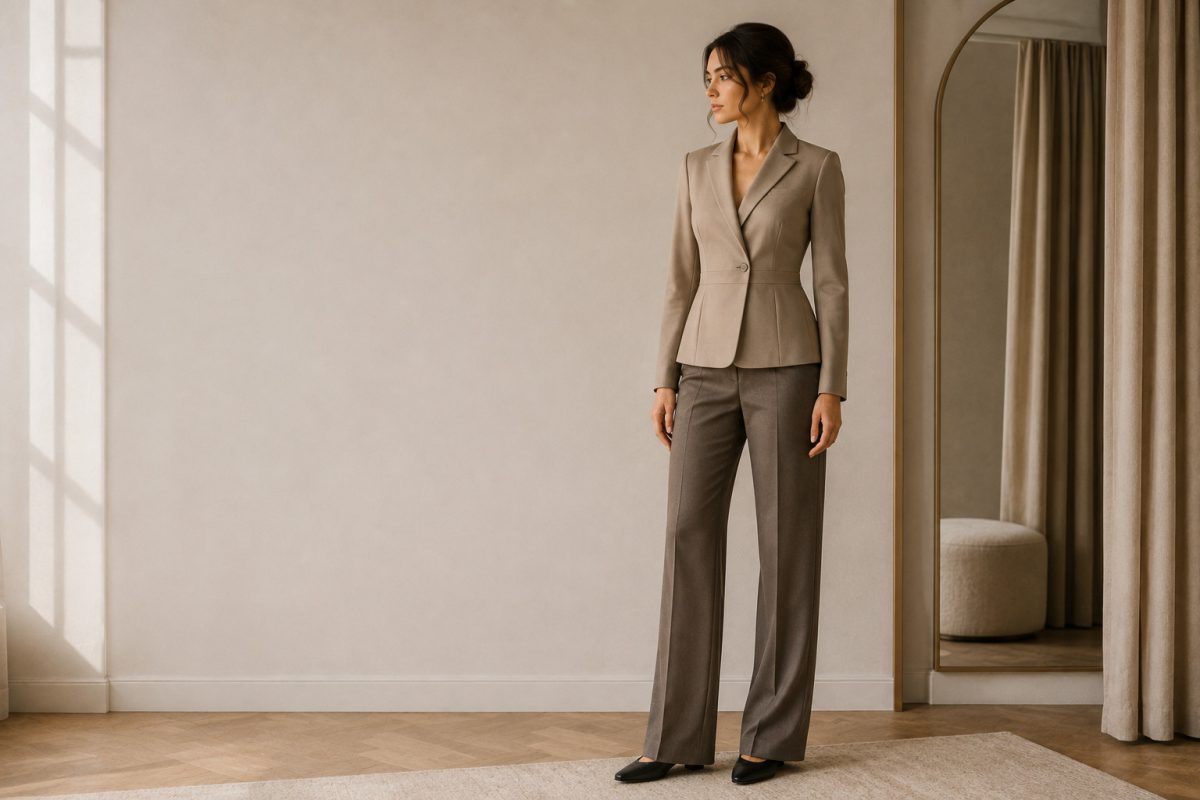
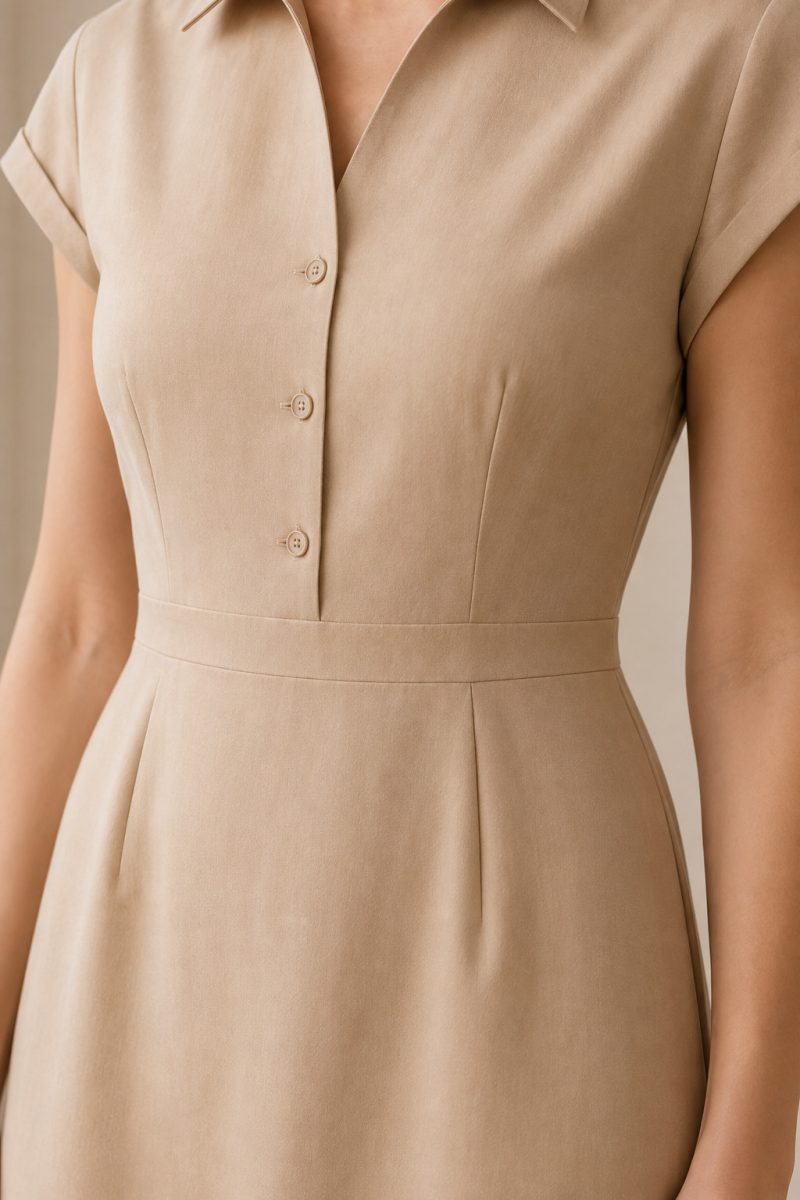
My sister and I bought the same shirtdress on the same afternoon, off the same rack, in the same size. On her, the waist seam sat at her waist and the sleeve ended at her wrist bone. On me, the waist seam sat somewhere around my ribs and the shoulder seam hovered out on my arm like a shrug I had not agreed to.
That is the whole subject in one story. Learning how to dress for your body type is not about naming a shape and shopping from a list. It is about knowing where your own structural points sit, where a garment’s seams sit, and when the two do not line up. Once you see it, shopping gets faster and much less personal.
Why the same garment fits two people differently
Every garment is built around a set of assumptions. Someone decided where the shoulder seam would land, where the waist seam would fall, how long the skirt would run from that seam down, and where the rise would end. Those decisions are sewn into the fabric and do not move when you put the garment on. Your body does not move either. What changes is the relationship between the two.
Think of it as four anchor points on the garment and four matching points on you. The shoulder seam wants the outer edge of your shoulder, where the arm begins. The waist seam wants your narrowest point through the middle. The hem wants a spot on your leg that reads as intentional. The rise wants your natural waist, or deliberately below it. When those pairs line up, the fabric falls in clean vertical lines. When they do not, the cloth has to go somewhere, and it goes sideways: pulling, pooling, bunching, gaping.
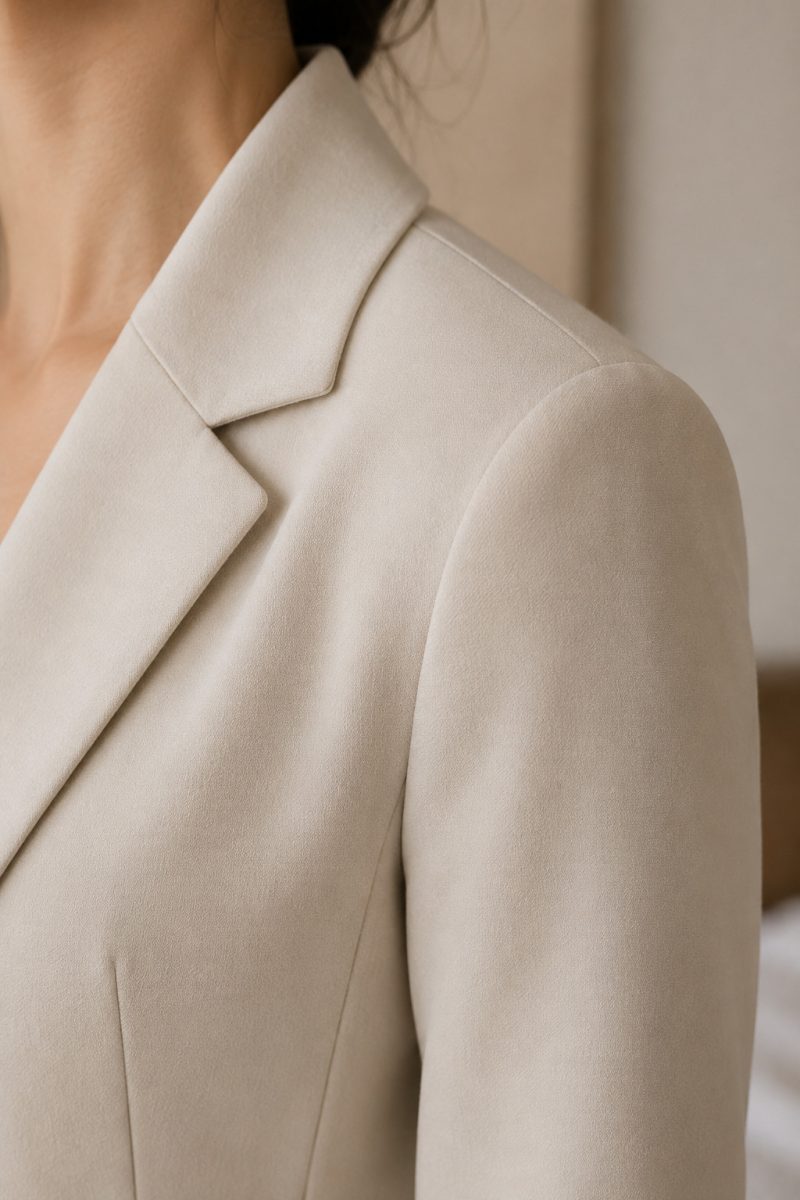
The shoulder seam decides the most, because the entire garment hangs from it. If it sits inside your shoulder point, the sleeve is pulled up into the armhole and you feel it every time you reach for a high shelf. If it sits outside, the sleeve head collapses and drags the waist seam down with it. That is the part people miss. A shoulder in the wrong place moves every other seam on the garment.
The waist seam is the second decider, because a garment with one is making a claim about where your waist is. If your waist sits higher than the garment expects, the seam lands on your ribs and the skirt starts from the wrong place. If your waist sits lower, the seam floats above it and the fabric never skims. That is not a body issue. It is a mismatch of one measurement.
Hems and rises work the same way, but their job is proportional rather than structural. They divide you into segments. A hem ending at the widest part of your calf draws a horizontal line there. A low rise creates a long block through the middle and a shorter one below. None of that is wrong. It is information, and it lets you choose on purpose.
The four measurements that actually decide fit
Most of what gets sold as a body shape clothing guide starts with an outline and works backwards. I would rather start with the four things that change how cloth behaves on a frame. No tape measure required. A mirror and ten minutes will do.
Shoulder width
Your shoulder width relative to your hips sets the frame everything hangs on. Broader shoulders carry structure easily but fill an armhole quickly, so a garment can feel tight across the upper back while still being loose at the waist. Narrower shoulders have the opposite trouble: structured jackets slide outward and drop shoulder styles look borrowed. Shoulder width is also the hardest thing to alter afterwards, which is why I check it first.
Torso length relative to leg length
Two women of identical height can be built completely differently through the middle. One carries more of her height between shoulder and hip; the other carries more of it below the hip. This explains most of the frustration with jumpsuits, anything with a defined waist seam, and the one piece swimsuits at the center of every summer capsule wardrobe. A long torso needs more vertical room above that seam or the garment pulls down on the shoulders; a short torso gets fabric stacking with nowhere to go. For a longer frame overall, our guide to outfits for tall women goes deeper on torso and leg proportion.
Waist position
Separate from torso length is where your narrowest point sits. Some women are narrowest high, close under the bust; others nearer the top of the hip. This decides whether a paperbag trouser, a wrap dress, or a belted coat works off the rack. A garment cut for a high waist, worn on a lower waist, puts its tightest part on the widest part of you, and the fabric has to stretch to get past it.
Hip to waist difference
The gap between your waist and your hip decides how much shaping a garment needs to sit still. A larger difference means straight cut trousers fit at the hip and stand away at the waist, which is where waistband gaping comes from. A smaller difference means heavily shaped garments pull across the hip and collapse at the waist, with nothing to fill the shaping.
Matching garment proportions to your own
This is the practical core of dressing for your proportions: read the garment, read yourself, and check whether the seams intend to land where your points are.
| If Your … | Garments That Hang Well | Why |
|---|---|---|
| Torso is long | Waist seams at or below the natural waist, mid to low rise trousers, untucked straight hem tops | A high seam lands on your ribs, so the skirt starts from the wrong point and never settles |
| Torso is short | Higher waist seams, cropped and tucked tops, longer rise trousers | Raising the seam gives the leg line room to read and stops fabric stacking between bust and hip |
| Shoulders are broad | Set in sleeves, open necklines, raglan and dolman shapes | The armhole leaves room for the shoulder, so the sleeve hangs straight |
| Shoulders are narrow | Structured shoulders, closer necklines, wider straps | A built shoulder holds its shape instead of sliding outward, so the bodice stays put |
| Waist sits high | Raised waist seams, cropped jackets, long rise wide leg trousers | The narrowest part of the garment meets the narrowest part of you, so fabric falls away |
| Waist sits low | Dropped waist seams, column dresses, tunic length tops | A longer bodice lets the seam meet you where you actually curve rather than binding above it |
| Hip to waist difference is large | Contoured waistbands, real darts, bias cut skirts | A shaped band follows the curve from waist to hip, so it sits flat at the back |
| Hip to waist difference is small | Straight cuts, unbelted coats, tops that skim rather than nip in | Deep shaping has nothing to work against, so a straighter cut hangs from the shoulder in one line |
The pattern across every row is the same. Nobody is being corrected. The garment is the variable, and there are thousands of garments. This holds just as well for a tailored jacket as for the casual outfits you actually wear on a Saturday.
Rise, hem, and where things break
Rise is the distance from the crotch seam to the top of the waistband, and it is the most underestimated measurement in a woman’s wardrobe. A rise ending at your natural waist creates one long line to the floor. A rise ending below it creates a shorter line below and a longer one above. What matters is choosing one on purpose. The complaint I hear most, that trousers always feel like they are slipping or sitting too high, is rarely about the trousers. It is a rise built for a different waist position than yours.
Hem length works by interruption. Wherever a hem ends, the eye stops. On skirts and dresses, the spots worth watching are the knee and the calf. A hem landing at the widest point of the calf draws a horizontal line there, which is why a midi feels odd on one woman and effortless on another. Move it up or down and the line changes. On trousers, a hem that puddles reads as unfinished, and one that stops short of the shoe cuts the leg line.
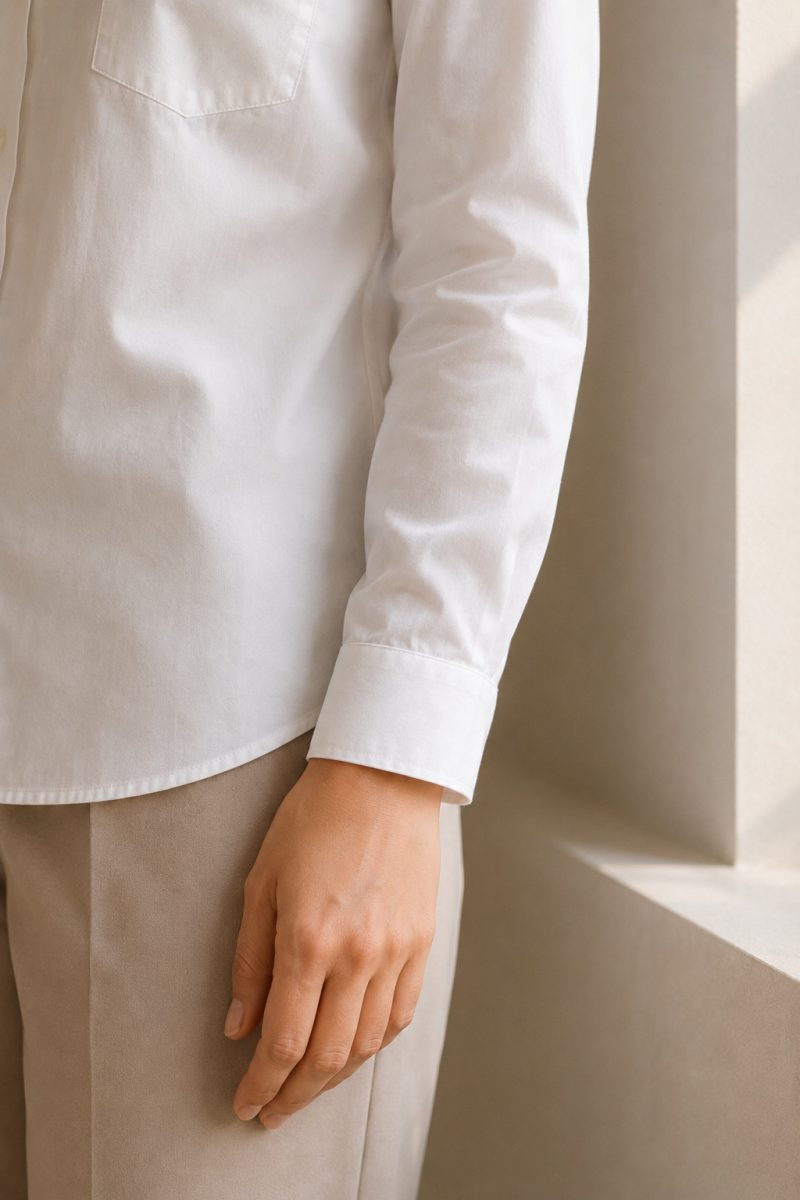
Sleeve length separates an outfit that reads as put together from one that reads as almost. A long sleeve ending past the base of the thumb makes a garment look borrowed. A sleeve ending at the wrist bone reads as correct on nearly everyone, and it matters more once you are layering, which is where most fall outfit ideas either work or fall apart. A three quarter sleeve should stop where the forearm is still narrow, not at the elbow crease, where it slides when you bend. These distinctions hold while seasonal trends come and go.
The fit check
This is the routine I run in a fitting room, in this order, every time. It takes two minutes and prevents most returns.
- Find the shoulder seam. Put a finger on the outer edge of your shoulder, where the flat top turns and becomes your arm. The seam should sit on that turn. Inside it, the garment restricts you; outside it, everything below hangs low. If the shoulder is wrong, stop there.
- Do the pull test across the back. Face away, look over your shoulder, and check for horizontal drag lines running armhole to armhole. Those mean the back is too narrow, and they will not relax with wear. Then cross both arms in front without the back seam straining.
- Sit down. Fully, on the bench, not a perch. Check whether the waistband digs, the skirt rides to a length you would not have chosen, the trouser pulls across the thigh. Most of your day is spent sitting, so your fit test should be too. If you move between sitting and standing all day, the same logic drives how I choose comfortable outfits for teaching days: test the garment in both positions.
- Raise your arms. Straight up, then out to the sides. If the hem lifts away and stays lifted, the armhole is cut too low. If the whole garment pulls upward, the shoulder is narrow or the bodice is short for your torso.
- Check the hem in a full length mirror. Stand back far enough to see your shoes and decide whether you like where the hem lands. Then walk: a hem that dips at the back is being pulled off grain somewhere above.
Do all of it in the underthings you would actually wear and in shoes with a similar heel. Half the fit problems I get asked about turn out to be a hem judged in bare feet. Fabric weight counts too: a heavy knit hangs from the shoulder differently than a fine one, which is why cozy knitwear deserves its own fit check rather than a guess.
What tailoring is worth doing
Buy for the shoulders, alter the rest. That is why I will happily walk out with something loose through the middle and refuse something a shade tight across the upper back. It is also the fastest route to owning fewer things that genuinely work, which is the entire premise behind a minimalist capsule wardrobe.
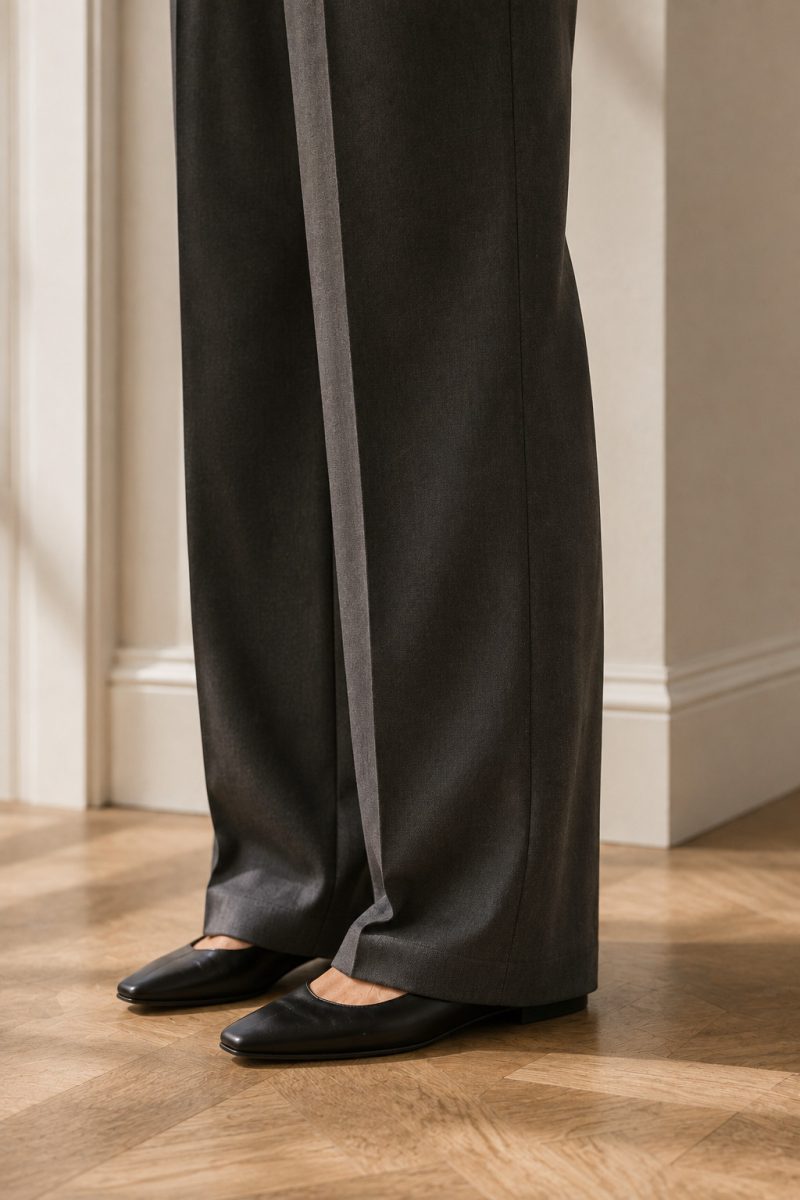
Hemming gives the best return of any alteration. Trousers, skirts, dresses, and coats all read differently when the hem lands where you chose rather than where the pattern maker guessed. If you only ever do one thing, do this.
Taking in a waist is second. A tailor can bring in the side seams or the center back so a dress, jacket, or trouser follows your own curve. This is the fix for waistband gaping, and it is why so many women who look effortless in structured work outfits are wearing things that were adjusted after purchase. Letting a waist out is sometimes possible too, depending on the seam allowance.
Shortening sleeves is simple on a shirt or a knit and more involved on a lined jacket with cuff buttons, where the tailor may need to work from the shoulder instead. It is worth doing on the structured pieces you reach for weekly, which for most of us means office outfits. Shortening straps is quick and moves where the bodice sits, which in turn moves the waist seam.
What I do not bother altering: shoulder width on a structured jacket, because it means rebuilding the sleeve head; trouser rise, because it changes the crotch curve and the whole fit of the leg; and pleated garments, where one seam throws the layout off. If a garment is wrong there, it is not your garment. Knowing quickly what is worth your time is most of the skill, a theme running through what we write about dressing well after forty.
FAQ
How do I know what clothes suit my proportions?
Find two or three garments you own that feel right, then look at where their seams sit on you. You will spot a pattern: a certain waist position, a certain sleeve length, a certain hem. That pattern beats any shape category, because it describes the garment rather than you.
Does height change what I should wear?
Less than people assume. Height matters mainly because makers grade vertical measurements alongside horizontal ones, so a garment correct through the bust can still put the waist seam in the wrong place. What drives your choices is how that height divides between torso and leg.
What is the difference between size and fit?
Size is a label describing a set of circumference measurements. Fit is whether the seams land on your structural points and the fabric hangs without straining. You can be the correct size in something and still have a poor fit, which is what happens when the label matches and the shoulder seam does not.
How do I know if something fits in the shoulders?
Run a finger along the top of your shoulder until you feel it curve down toward your arm; the seam should sit at that curve. Then check the back for drag lines and try crossing your arms in front. If the seam sits correctly and you can move freely, the shoulder is right and everything else is negotiable.
None of this is about becoming a different shape. A garment is a set of decisions someone else made, and you are allowed to reject them when they do not match your own architecture. Learn where your shoulder point is, where your waist sits, and how your height divides, and the fitting room stops being a verdict. It becomes the place where you find out whether this thing was cut for someone built like you, which is a much easier question to answer.

About the Author
Allena Rissa
Founder & Editor
Allena Rissa is the founder and editor of The Better Fit. She has been writing about clothes since she was twenty-two, and for nine years she has been the one dressing her husband, her kids, and herself for family photos, fall weddings, work conferences, and Christmas cards that had to land. On the site she covers five pillars: Her Style, His Style, Together, Occasions, and Foundation, the bras and fit mechanics that started it all. Her advice has been featured in Cosmopolitan, Better Homes & Gardens, Insider, and NBC.