As an Amazon Associate we earn from qualifying purchases.
My sister called me from her closet floor at ten at night, invitation in hand, reading the bottom line out loud like a riddle: “cocktail attire.” She wanted to know if that meant the navy dress she wears to work parties or the one with the sequins. Here is what I told her, and what I tell everyone. Cocktail attire means a dress that stops somewhere between the knee and the ankle, in a fabric with some polish to it, with a real shoe, and a man in a suit and tie. It is dressy. It is not a ballgown.
The problem is that invitations are wildly under-specified. Two words at the bottom of a card are supposed to convey the formality of an entire evening, and they never account for the venue, the hour, or the fact that the couple’s idea of “formal” came from a Pinterest board. So this is the decoder: every common wedding guest dress code, what the host actually means, what I would wear, what I would put my husband in, and the mistake I see over and over.
White Tie
White tie is the most formal dress code that exists, and it is rare. The host is telling you the evening has a program, the photographs will be posed, and nobody is leaving early.
Women wear a floor length gown. Not a long dress with a casual cut, an actual gown: structured bodice, fabric with weight to it, a hem that grazes the floor in your shoes. Long gloves are traditional and still look right. Men wear a black tailcoat, trousers with a satin stripe, a white waistcoat, a white bow tie, and a wing collar shirt.
What to avoid: a tea length or midi hem. A shorter hem reads as though you did not read the invitation, no matter how beautiful the dress.
Black Tie
Black tie is what most people picture when they think “fancy wedding.” Evening ceremony, ballroom or historic venue, seated dinner. When a host writes black tie, they mean it, and they are quietly hoping nobody shows up in a work suit.
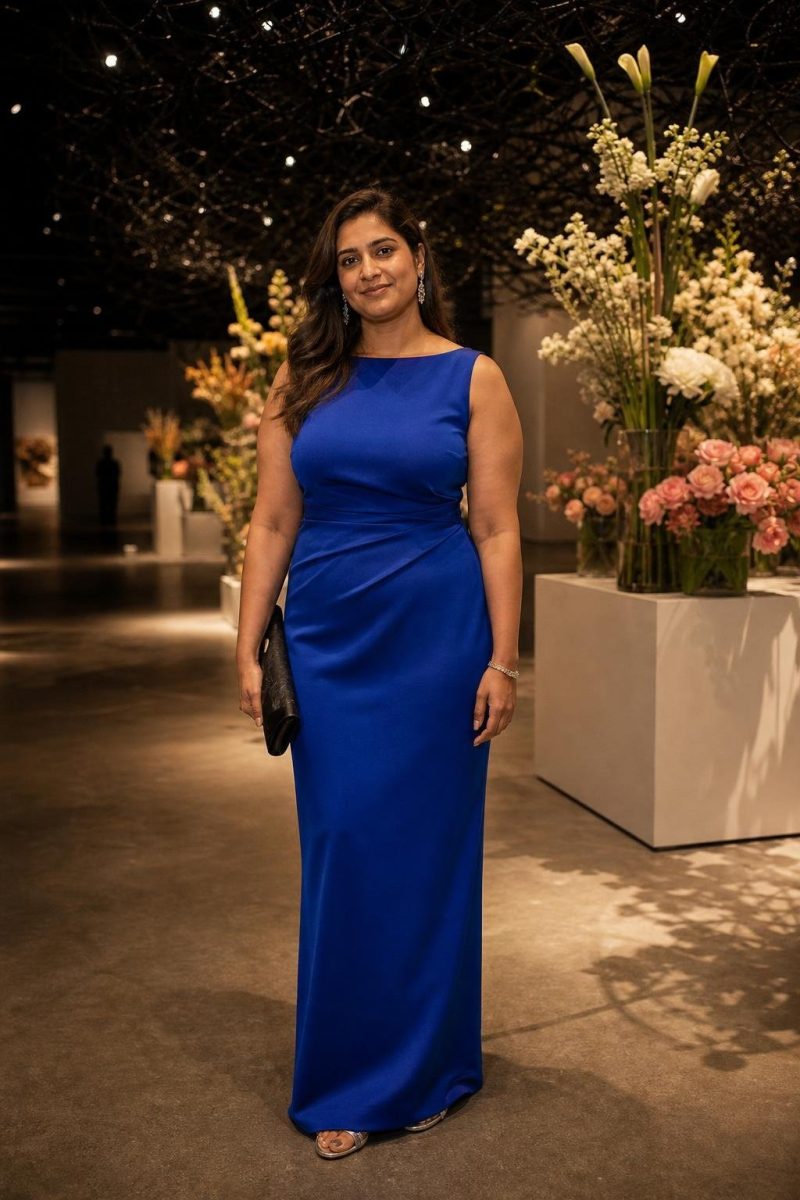
Women wear a floor length gown or a formal jumpsuit in a fabric with some drama to it: velvet, crepe, satin, heavy chiffon, beading. Men wear a tuxedo, meaning a black dinner jacket, matching trousers, a black bow tie, polished shoes. Midnight blue is a fine substitution. A black suit with a long tie is not a tuxedo and everyone can tell.
What to avoid: florals in a light cotton or a sundress silhouette, even if it is long. Length alone does not make a dress formal. I broke the fabric question down further in my guide to black tie wedding guest outfits.
Black Tie Optional
This is the one that causes the most texting between guests, and the most honest code on the list. Black tie optional means the couple wants a formal evening but knows not every guest owns or wants to rent a tuxedo. They are giving men an exit ramp. They are not giving anyone permission to dress down.
For women, I treat black tie optional exactly like black tie: a gown, an elegant midi in an evening fabric, or a sharp formal jumpsuit. The “optional” part almost never applies to us in practice. Men can wear a tuxedo or a dark suit in charcoal, navy, or black, with a crisp white shirt, a conservative tie, and polished leather shoes, not the office rotation.
What to avoid: reading “optional” as “casual is fine.” I watched a guest arrive in a printed wrap dress and sandals and spend the night visibly aware of it. Nobody has ever been embarrassed by being slightly more dressed than the room.
Formal
“Formal” without the words “black tie” attached sits one notch below. It shows up on invitations for evening weddings where the couple did not want to require tuxedos. It is a soft request for elegance.
Women wear a floor length dress or a long, dressy midi. This is the sweet spot for a well cut column dress or anything with a considered sleeve. It is a forgiving category if you prefer more coverage, and many of my favorite modest wedding guest dresses land right here. Men wear a dark suit and tie.
What to avoid: separates that look like office wear. A shell top and a pencil skirt is not formal, it is Tuesday.
Cocktail Attire
Cocktail attire is the most common wedding guest dress code and the most misread. Here is what the host means: dress up, but do not wear a gown. They want a room that photographs well without asking anyone to rent formalwear. The ceremony is usually late afternoon or early evening, with dinner and dancing after.
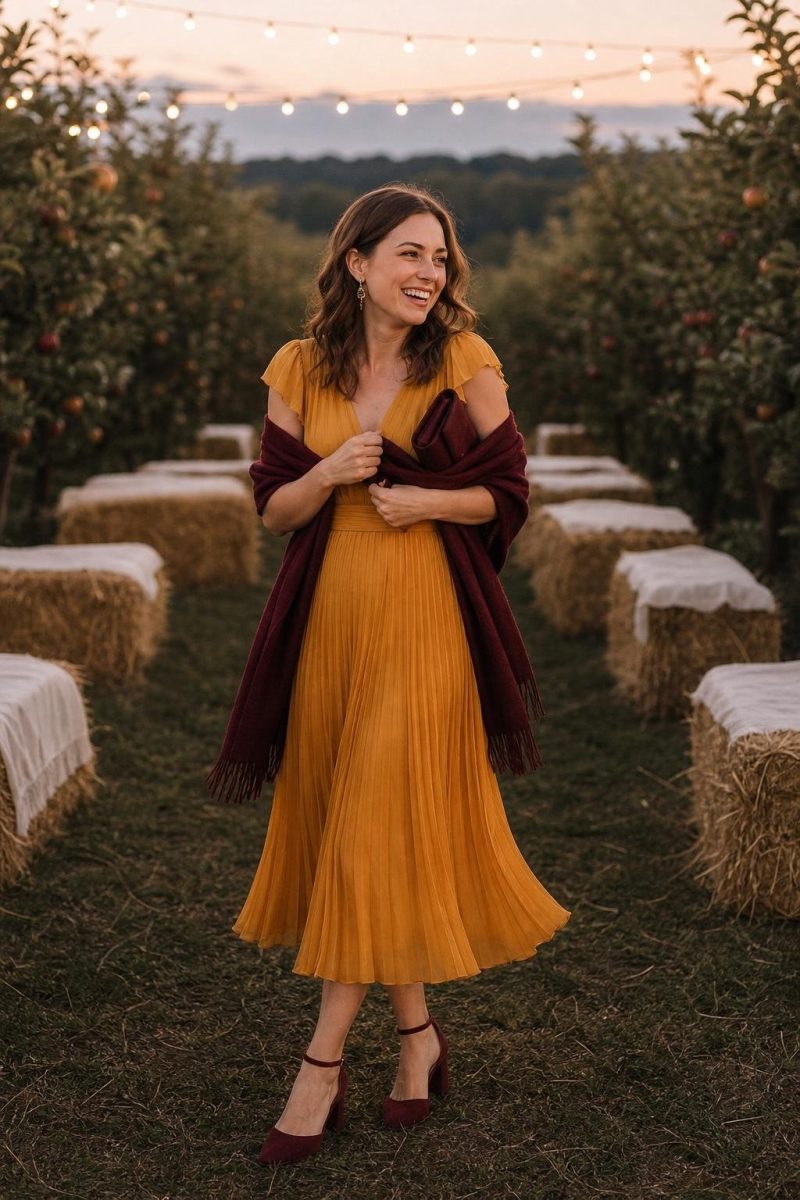
For women, cocktail attire means a dress that hits just above the knee, at the knee, or at midi length. All three are correct. I lean midi for daytime and knee length for evening, but a midi in a soft fabric reads beautifully at a four o’clock garden ceremony, while a knee length dress in crepe or satin looks sharper under string lights. Fabric matters more than hem. Crepe, satin, taffeta, jacquard, velvet in cold months, and structured knits all read cocktail. Jersey and cotton do not.
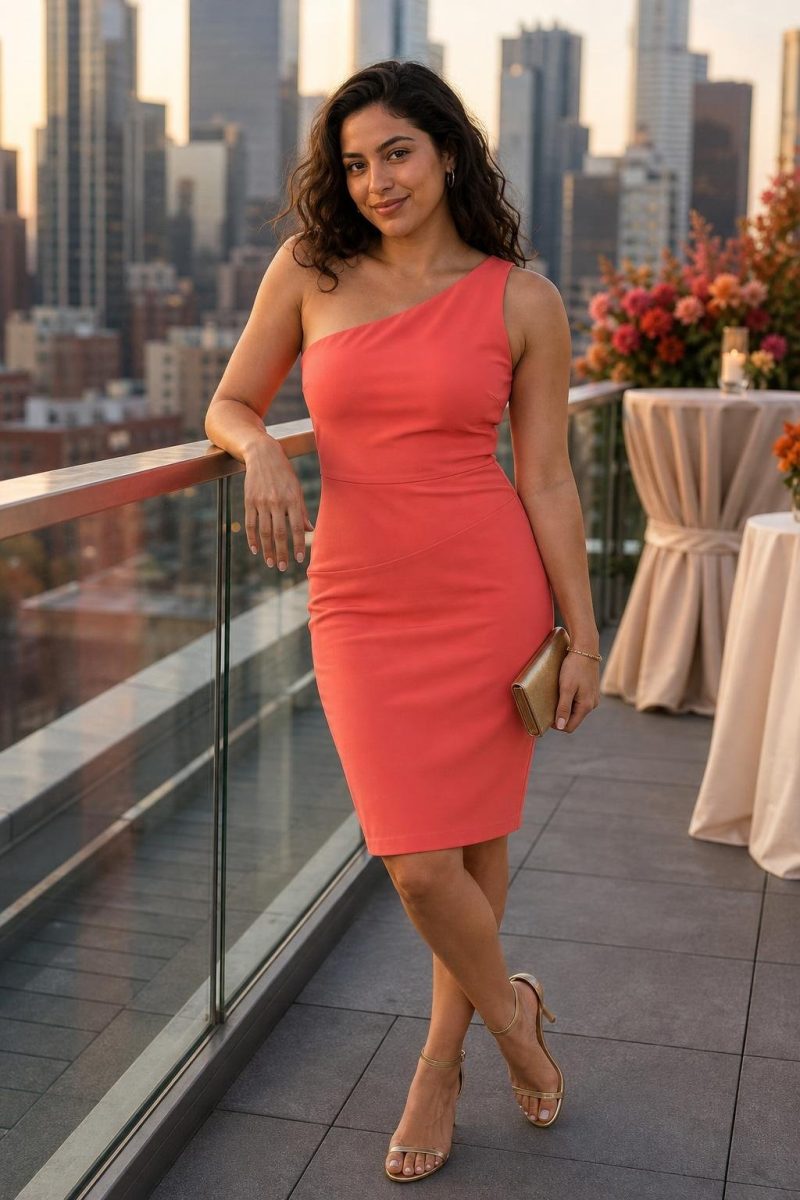
A dressy jumpsuit counts. So does a matching top and skirt if the fabric has shine or structure. If you want sleeves, a fitted long sleeve midi in crepe is one of the strongest options here, and it is the silhouette I reach for most often when I build outfits for women over 40. Shoes should be a heel, a block heel, or a dressy flat. I avoid anything that looks like a work pump, and I avoid a flat sandal that belongs at a farmers market.
For men, cocktail attire means a suit. Full stop. Navy, charcoal, or gray in cooler months, and lighter gray, tan, or soft blue in warm weather. A tie is expected. Some men have decided ties are optional here, and I disagree: without one, he looks like he came from the airport.
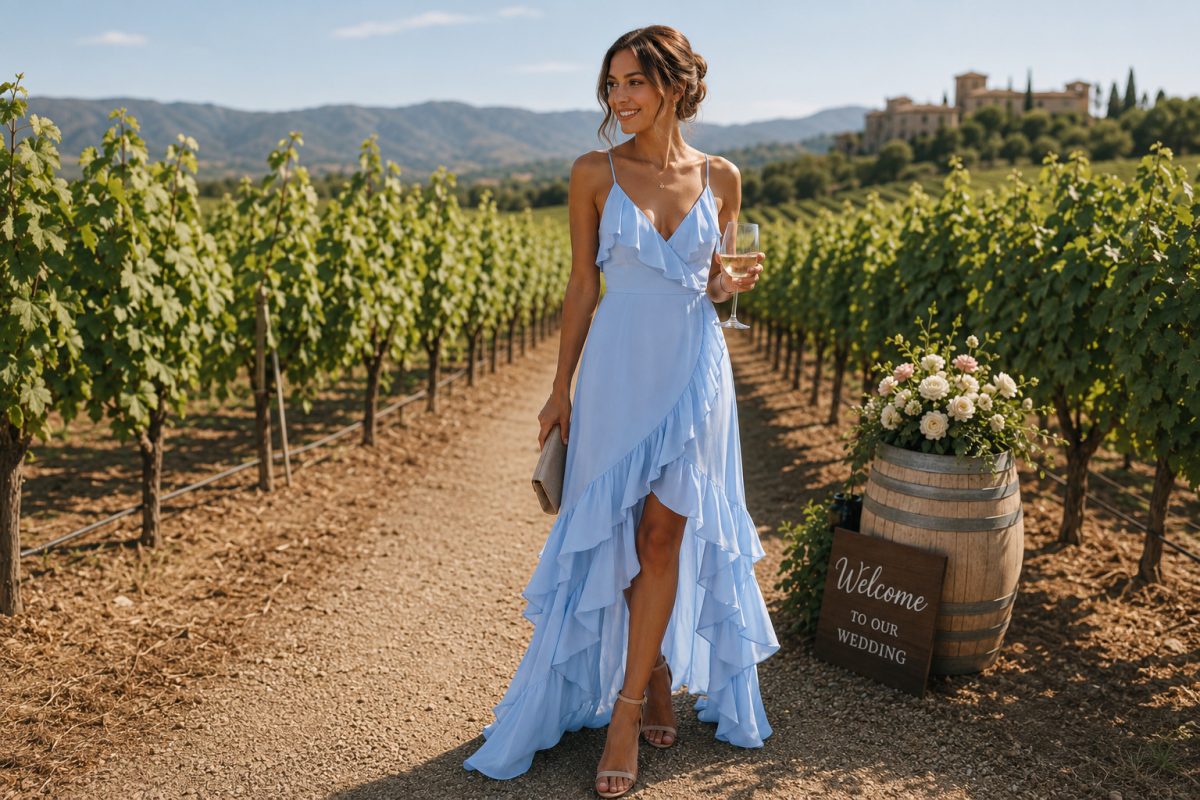
What confuses people is the range inside this one code. A rooftop wedding in October and a vineyard wedding in June call for very different dresses, and both are correct. Formal venue plus evening ceremony means push dressier: deeper colors, richer fabric, real jewelry. Outdoor venue plus afternoon ceremony means push lighter: color, print, a midi that moves. If you want one dress that covers several of these, look for a midi in a substantial fabric with a defined waist. Plenty of wedding guest dresses are cut exactly that way.
What to avoid: a full length gown. It is the most common cocktail attire mistake, and an understandable one. But a gown puts you in a different category than everyone else in the photos. Skip the floor sweeping hem, and skip white, ivory, and champagne.
Semi Formal
Semi formal attire is cocktail’s calmer sibling. The couple wants you dressed up but not fussy, and the reception is often a lunch, a brunch, or an early evening event.
Women wear a knee length or midi dress in a simpler fabric, or a dressy skirt and top. This is the one category where a printed dress in a lighter fabric genuinely works, and where a cardigan does not undercut it. Men wear a suit without a tie, or a blazer with dress trousers and a button down shirt. Loafers are fine here.
What to avoid: denim of any kind, in any wash, on anyone. Semi formal attire is still formal enough that jeans read as a statement.
Dressy Casual
Dressy casual, sometimes written as “festive casual” or “garden party attire,” is the couple telling you to be comfortable without being sloppy. It shows up at backyard weddings, barn venues, and celebrations held long after the courthouse.
Women wear a printed midi, a wrap dress, a flowy maxi in a light fabric, or dressy separates. This is where a beautiful cotton or linen blend dress finally earns its place. Wedges are practical if there is grass, and I skip a stiletto entirely. Men wear dress trousers or well cut chinos with a button down. Some of my go to summer wedding guest outfits live here because they hold up in heat without looking like beachwear.
What to avoid: taking “casual” literally. This is not a t shirt dress and it is not shorts. The operative word is still dressy.
Beach or Destination
Beach and destination weddings have their own physics: sand, humidity, wind, and a walk across a lawn in your shoes. The couple wants you pulled together while accepting that the environment gets a vote. Weddings held at resorts or on ships follow the same logic as my usual cruise outfit ideas, which means layers for wind and cold dining rooms.
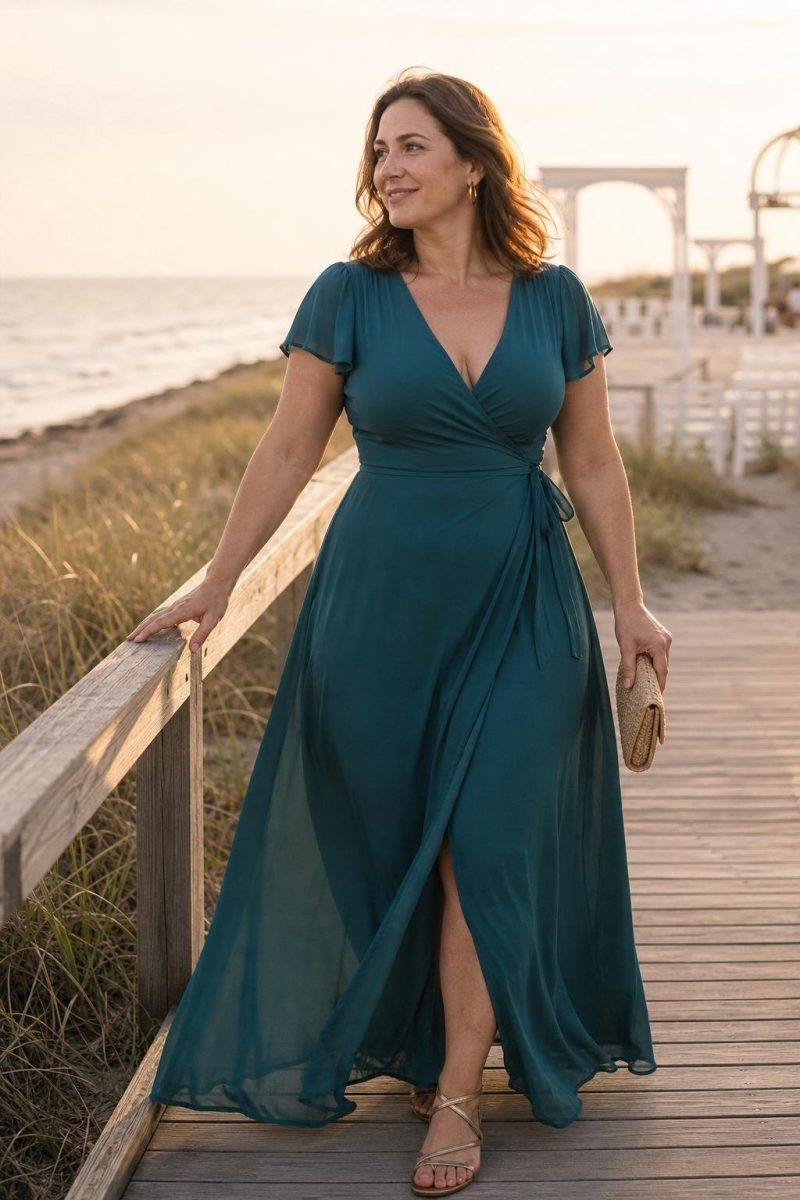
Women wear a flowing maxi or midi in a light, breathable fabric with a print or a saturated color. Movement is the point: a hem that catches the breeze photographs better than anything stiff. I choose a wedge or a block heel, and I bring a wrap for when the sun drops. The best beach wedding guest dresses have a defined waist so the wind does not turn the dress into a parachute. Men wear linen or lightweight cotton trousers with a button down, sleeves rolled.
If the wedding requires a flight, plan the whole trip the way you would plan vacation outfits for any destination, so the wedding look shares shoes and layers with the rest of the suitcase.
What to avoid: a stiletto. It will sink, and you will spend the ceremony balancing on the balls of your feet.
Wedding Dress Codes at a Glance
| Dress Code | What Women Wear | What Men Wear | Formality |
|---|---|---|---|
| White Tie | Floor length gown, gloves, statement jewelry | Tailcoat, white waistcoat, white bow tie | Highest |
| Black Tie | Floor length gown or formal jumpsuit | Tuxedo with black bow tie | Very high |
| Black Tie Optional | Gown, evening midi, or formal jumpsuit | Tuxedo or dark suit with tie | High |
| Formal | Floor length dress or dressy long midi | Dark suit and tie | High |
| Cocktail Attire | Knee length or midi in crepe, satin, or velvet | Suit and tie | Moderate to high |
| Semi Formal | Knee length or midi dress, dressy separates | Suit without tie, or blazer and trousers | Moderate |
| Dressy Casual | Printed midi, wrap dress, light maxi | Chinos or dress trousers with button down | Relaxed |
| Beach or Destination | Flowing maxi or midi in breathable fabric | Linen trousers, button down, jacket optional | Relaxed but polished |
How to Read a Dress Code the Invitation Never States
Plenty of invitations say nothing at all. That gap is fillable with three signals that are always available.
Venue. Look the place up. A hotel ballroom, a historic mansion, a country club, or a museum means formal or cocktail. A winery, a garden, or a restaurant means cocktail. A barn, a backyard, or a brewery means dressy casual to semi formal. The venue’s own photo gallery is the most reliable read you can get in two minutes.
Time of day. This one is close to a rule. A ceremony before four in the afternoon is a daytime wedding: lighter colors, prints, softer fabrics, men in suits rather than tuxedos. A ceremony at six or later is an evening wedding: deeper colors, more structure, more shine. When a wedding starts at half past five, I dress for the reception rather than the ceremony.
Season. Season tells you fabric and color more than formality. In warm months, look for breathable weaves, prints, and colors with light in them, which is the territory covered by most summer wedding guest dresses. Once the weather turns, the palette shifts toward rust, burgundy, forest, and plum, with velvet, crepe, and heavier satin doing the work, which is the logic behind the fall wedding guest dresses I keep coming back to.
Remember that a wedding is rarely one outfit. There is usually a party or a shoot somewhere in the run up, and engagement photo outfit ideas follow the same venue and season logic as the wedding itself. If you are attending with a partner, settle both outfits at the same time, because two people dressing separately is how you end up clashing in the group photos, and a few couple outfit ideas solve it in five minutes.
Stack the three signals and the answer appears. Museum plus seven o’clock plus November means a dark, dressy midi. Vineyard plus three o’clock plus June means a printed midi and a wedge. If two signals conflict, follow the venue.
Wedding Guest Dress Code FAQ
What is the dress code for cocktail attire?
Cocktail attire means dressy but not floor length. For women, that is a dress hitting anywhere from just above the knee to midi length, in a fabric with polish such as crepe, satin, velvet, or jacquard. For men, it means a suit and tie with leather dress shoes.
What is cocktail attire for men?
A full suit in navy, charcoal, or gray with a dress shirt, a tie, a leather belt, and leather shoes. Lighter colors like tan or soft blue work for daytime and warm weather weddings. A blazer with mismatched trousers is not cocktail attire, and neither is a suit worn with sneakers.
What should you not wear to cocktail attire?
Skip white, ivory, and champagne, since those belong to the bride. Skip a full ballgown, which overshoots the code, and skip jersey, cotton knit, or denim, which undershoot it. I also skip thin strap sundress silhouettes.
Is cocktail attire the same as semi formal?
No, though they overlap enough that people use the terms interchangeably. Cocktail attire is a step dressier: richer fabrics, a tie for men, more evening feeling overall. Semi formal attire allows simpler fabrics, dressy separates, and a suit without a tie.
Can you wear a long dress to a cocktail wedding?
A long dress works if it reads as a dress rather than a gown: no train, no heavy beading, no corseted bodice. A simple column maxi in crepe with a clean neckline is fine at an evening cocktail wedding. A structured ballgown is not, and I would choose a midi any time you are unsure.
Dress codes are not a test. They are shorthand for the kind of night the couple planned, and once you can translate them, getting dressed takes ten minutes instead of a week. Read the two words, check the venue and the hour, then wear the thing you can actually dance in.

About the Author
Rachel Meyers
Contributing Fashion Creator · Amazon Influencer
Rachel Meyers is a contributing fashion creator for The Better Fit, filming try-ons from Orem, Utah. She has spent three years in the Amazon Influencer Program and is an All-Star contributor in the Viral Vue creator community, and her storefront, Rachel's Reviews and Fun Finds, leans into women's fashion and shoes. Rachel is also a certified life and health coach, and that double life shapes how she reviews: she cares less about how a piece photographs and more about how it feels on a school run, at work, or on the third wear. Her latest try-ons land on YouTube at @rachelsfunfinds.